
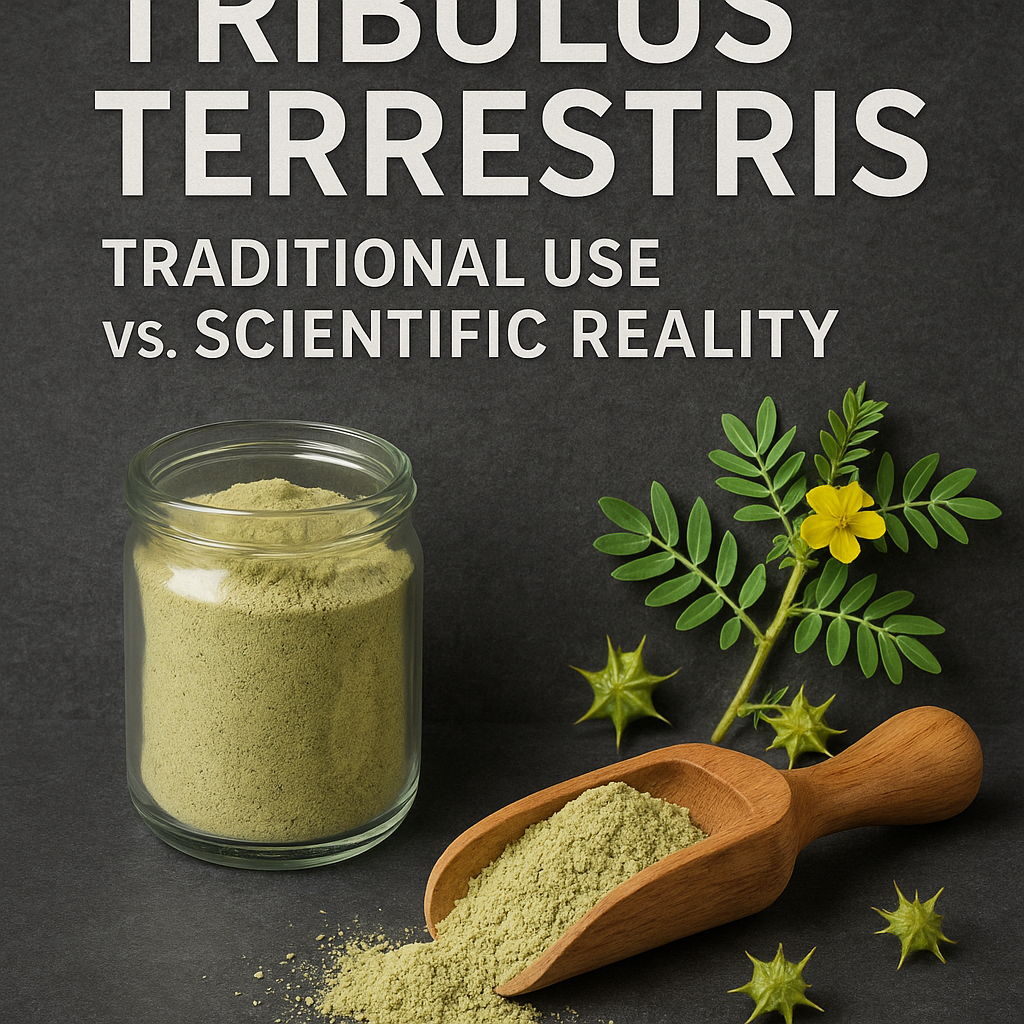
For centuries, Tribulus Terrestris—a spiny plant with small yellow flowers—has held a revered place in traditional healing systems from India to the Balkans. Marketed today as a natural performance booster and testosterone enhancer, Tribulus has become a buzzword in sports nutrition and herbal medicine.
But what does modern science say about it?
In this article, we examine the cultural origins, modern health claims, clinical research, and practical uses of Tribulus Terrestris—clearing the air between time-honored tradition and current scientific evidence.
What Is Tribulus Terrestris?
Also known as:
- Gokshura in Ayurveda
- Bindii or caltrop in Western herbalism
- Puncture vine for its sharp seed pods
Tribulus is native to Mediterranean, Asian, and African regions and has long been used to support urinary, sexual, and cardiovascular health.
Traditional Uses of Tribulus
In ancient systems of medicine, the plant was used for:
- Male vitality and libido (especially in Ayurveda and Traditional Chinese Medicine)
- Kidney and urinary tract function (Ayurveda: “mutrakrichantak”)
- Diuretic purposes
- Heart and blood pressure regulation
It was traditionally prepared as teas, decoctions, and tonics—often blended with other adaptogens.
Nutritional and Phytochemical Profile
Tribulus contains:
- Steroidal saponins (especially protodioscin) – linked to hormonal support
- Flavonoids and alkaloids – for antioxidant and circulatory effects
- Phytosterols – may influence cholesterol levels
- Tannins – with astringent properties
However, concentration varies greatly by region, plant part, and extraction method—key to understanding conflicting research results.
Does Tribulus Boost Testosterone?
This is the most common question—and the most controversial claim.
🧪 Scientific Summary:
- Some animal studies suggest Tribulus may increase luteinizing hormone (LH), stimulating testosterone production.
- Human trials show mixed results:
- A study in Journal of Ethnopharmacology (2005) found no significant increase in testosterone in healthy young men.
- Another in Phytomedicine (2014) found improved libido and sexual satisfaction, without hormone level changes.
📌 Bottom line: It may enhance sexual well-being and libido, but not raise testosterone significantly in healthy men.
Libido and Sexual Function
While testosterone effects are inconsistent, Tribulus has shown stronger results for improving sexual satisfaction and arousal.
🧪 Evidence:
- A randomized trial in Maturitas (2014) found improved sexual desire and lubrication in postmenopausal women.
- Another trial in men showed increased erection quality and satisfaction, even without changes in testosterone.
📌 Note: These effects may be due to improved blood flow, nervous system support, and adaptogenic activity.
Effects on Athletic Performance
Tribulus is marketed as a muscle builder and performance enhancer, especially in sports supplements.
🧪 Evidence:
- A double-blind study in International Journal of Sports Nutrition (2000) found no difference in strength or body composition after 8 weeks of supplementation in trained athletes.
📌 Verdict: It may help libido and mood, but not muscle gains.
Cardiovascular and Urinary Support
Less known, but well documented in traditional uses:
- May act as a natural diuretic
- Contains compounds that support blood pressure balance
- Traditionally used in kidney stone prevention and urinary discomfort
🧪 Study:
- Animal models show mild antihypertensive effects, but human studies are still limited.
Practical Use: How to Include Tribulus Safely
🔸 Capsule or Extract Form
- Typical doses: 250–750 mg daily of standardized extract (40–60% saponins)
- Start small and observe tolerance
🔸 Tea or Decoction
- Less potent, but traditional: simmer dried root or powder in water for 10–15 minutes
📌 Tip: Choose products with known saponin concentration for consistency.
Who Should Avoid It?
While Tribulus is generally well tolerated, caution is advised for:
- Pregnant or breastfeeding women
- People with hormone-sensitive conditions
- Those with kidney disorders
- Anyone taking medications for blood pressure or diuretics
⚠️ Always consult a physician if using long-term or therapeutically.
Final Thoughts: Between Tradition and Modern Evidence
Tribulus Terrestris is more than just a sports supplement gimmick. It’s a plant with centuries of use in promoting vitality, urinary health, and circulatory balance. While the testosterone claims remain inconclusive, it shows real promise for enhancing libido, sexual well-being, and urinary support—especially when used as part of a holistic approach.
Respect its roots, understand its limitations, and you may find Tribulus to be a worthy addition to your health toolkit.