
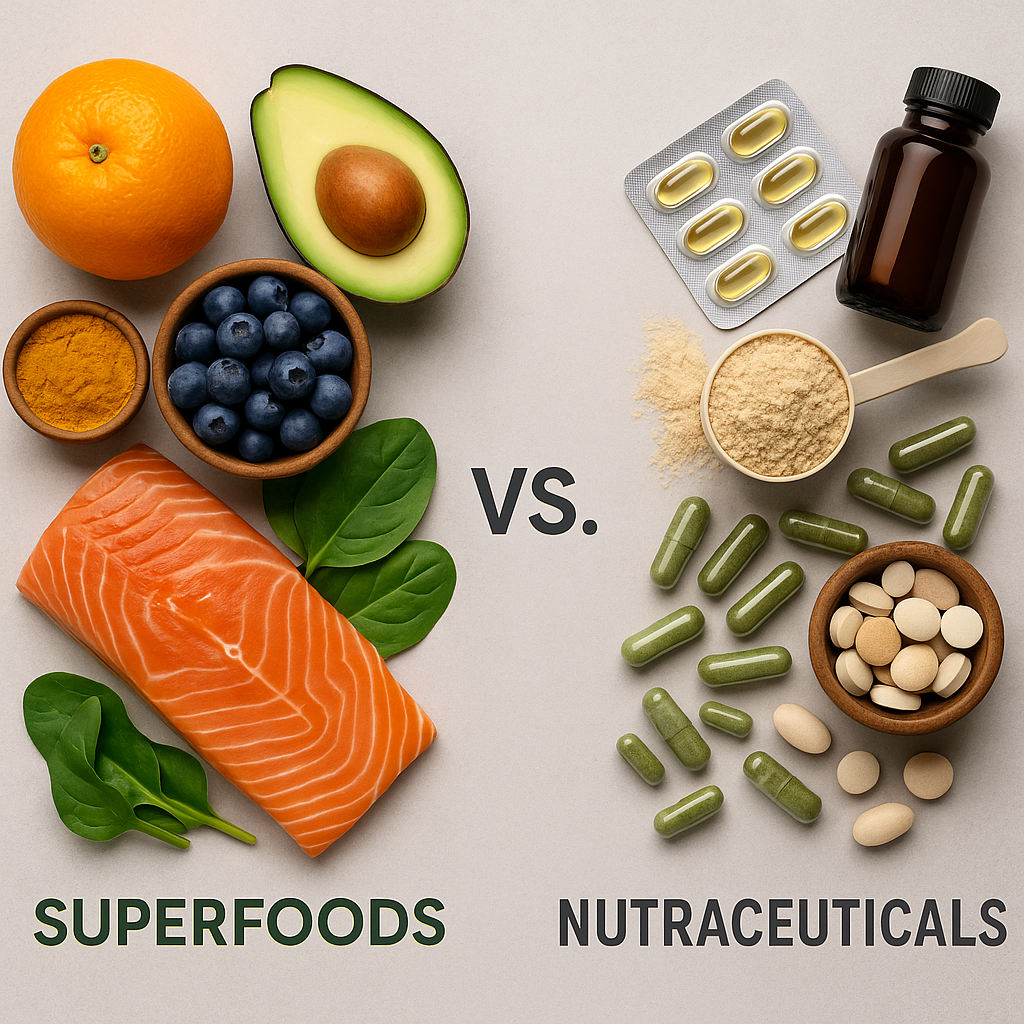
In the world of health and wellness, the terms superfoods and nutraceuticals are often used interchangeably. Both refer to nutrient-dense substances that offer health benefits—but they are not exactly the same thing.
Understanding the differences between these two powerful categories can help you make better dietary and lifestyle choices. In this article, we’ll break down the definitions, benefits, and distinctions between superfoods and nutraceuticals to clear up the confusion once and for all.
Defining Superfoods
Superfoods are natural foods that are particularly rich in nutrients like antioxidants, vitamins, and minerals. They’re often whole foods that support general health and well-being.
Common Characteristics:
- Naturally occurring (not processed or altered)
- Nutrient-dense and low in calories
- Found in fruits, vegetables, seeds, nuts, and grains
Examples of Superfoods:
- Blueberries: rich in antioxidants and brain-boosting compounds
- Kale: full of fiber, vitamin K, and iron
- Chia seeds: packed with omega-3s and fiber
- Avocados: loaded with healthy fats and potassium
- Salmon: high in protein and omega-3 fatty acids
Superfoods are often used in their whole-food form and can be easily added to smoothies, salads, or meals.
Defining Nutraceuticals
Nutraceuticals, on the other hand, are a broader category that includes food-derived products specifically designed to provide medicinal or therapeutic benefits.
Common Characteristics:
- May be whole foods, extracts, or isolated compounds
- Often sold in supplement or fortified food form
- Aimed at preventing or treating specific health issues
Examples of Nutraceuticals:
- Fish oil capsules (concentrated omega-3s)
- Turmeric extract (curcumin)
- Resveratrol supplements (found in grape skins)
- Probiotic capsules
- Green tea extract
Nutraceuticals often go beyond basic nutrition to actively support bodily functions, treat deficiencies, or reduce disease risk.
Key Differences Between Superfoods and Nutraceuticals
Let’s look at how superfoods and nutraceuticals differ across several key areas:
| Feature | Superfoods | Nutraceuticals |
|---|---|---|
| Form | Whole, natural foods | Supplements, powders, capsules, extracts |
| Purpose | General health support | Targeted health benefits or therapy |
| Processing Level | Minimal | Often concentrated or synthesized |
| Regulation | Considered food | Lightly regulated as supplements |
| Usage | Eaten as part of meals | Taken as dietary additions or remedies |
| Examples | Berries, kale, seeds | Fish oil, curcumin, probiotics |
While both superfoods and nutraceuticals promote health, superfoods are more about diet, and nutraceuticals are more like functional medicine.
Can a Superfood Be a Nutraceutical?
Yes—some ingredients fall into both categories, depending on how they’re used.
For example:
- Turmeric (superfood): can be grated fresh into a curry.
- Curcumin (nutraceutical): is the extracted active compound from turmeric, often consumed in capsules for inflammation.
Likewise:
- Green tea (superfood): consumed as a beverage.
- Green tea extract (nutraceutical): used in weight loss supplements or energy pills.
This dual use is common, and the distinction often depends on form, purpose, and processing.
How They Work Together
You don’t have to choose between superfoods and nutraceuticals—they can work together to enhance your health.
Example Daily Routine:
- Breakfast smoothie with kale, banana, and chia seeds (superfoods)
- Midday turmeric supplement for inflammation (nutraceutical)
- Afternoon green tea (superfood)
- Evening probiotic capsule (nutraceutical)
Using both allows you to benefit from nature’s nutrients while also getting targeted support for specific concerns.
When to Use Each
Here’s a quick guide to help decide when to turn to superfoods and when to consider nutraceuticals:
| Your Goal | Best Option |
|---|---|
| Improve overall diet quality | Superfoods |
| Get more vitamins and minerals | Superfoods |
| Address joint pain or inflammation | Nutraceuticals |
| Support gut health | Both (e.g., yogurt + probiotics) |
| Prevent chronic illness | Both (as part of a healthy lifestyle) |
What the Research Says
Both categories have strong scientific support. However, nutraceuticals are often backed by more clinical trials, especially when isolated compounds are studied for medicinal use.
That said, diets rich in superfoods like leafy greens, fruits, nuts, and fatty fish have been proven to reduce the risk of chronic disease, support longevity, and improve mental and physical performance.
Researchers agree: whole-food nutrition is the foundation of health, and targeted nutraceuticals can offer additional benefits when needed.
Final Thoughts: Integrating Both for Optimal Health
Superfoods and nutraceuticals are two sides of the same coin. While superfoods form the foundation of a healthy diet, nutraceuticals provide an extra layer of targeted support.
The key to success is balance. Prioritize a diet rich in whole, colorful foods—and then, if necessary, add nutraceuticals to address specific needs or deficiencies.
By understanding how they differ—and how they complement each other—you can take charge of your health in a more strategic, effective way.