
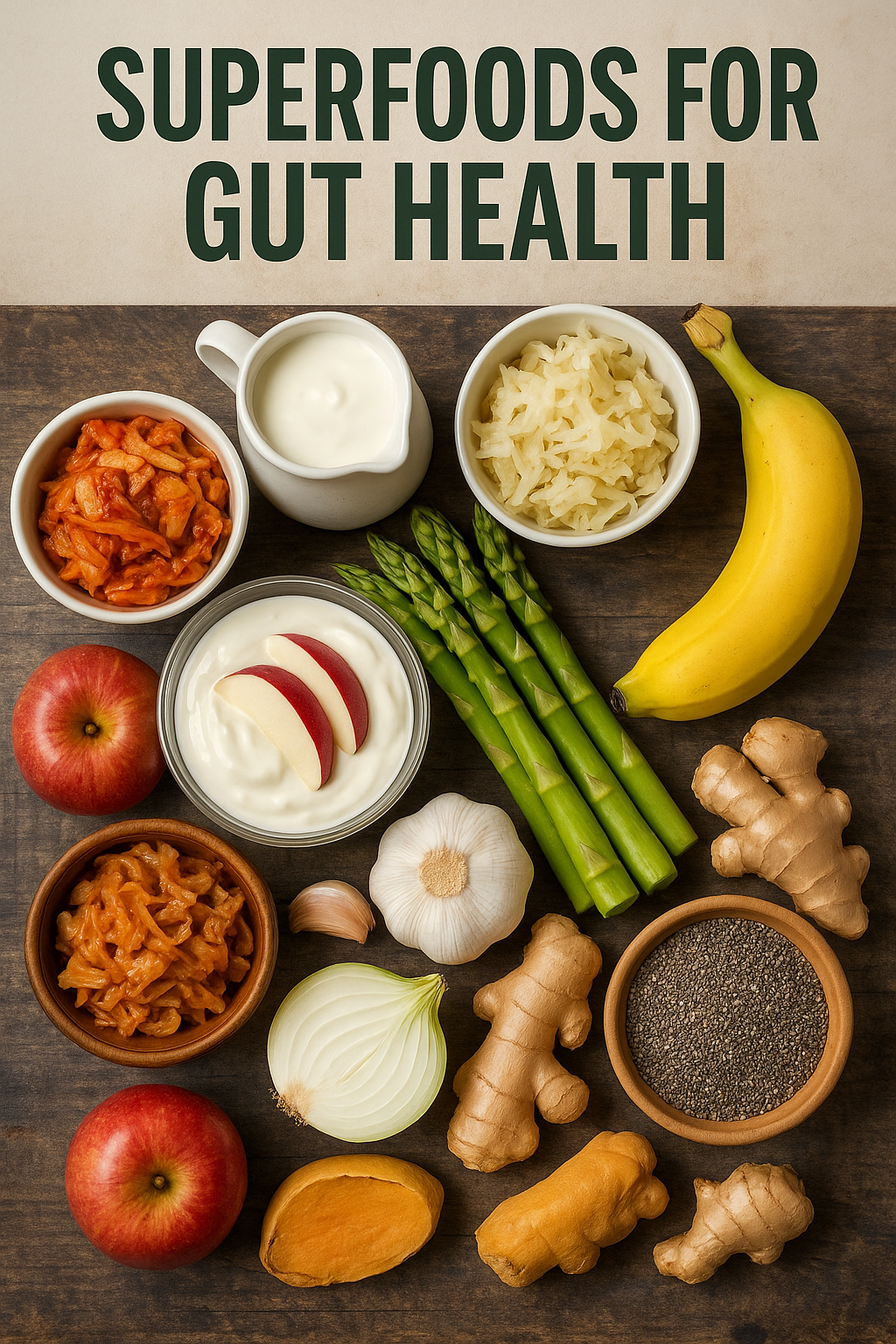
The health of your gut plays a central role in your overall well-being. From digestion to immunity and even mood regulation, the gut microbiome—the community of trillions of bacteria and microorganisms in your digestive system—is foundational to good health. Superfoods rich in fiber, probiotics, and anti-inflammatory compounds can help nourish this vital system.
In this article, we’ll explore the best superfoods for gut health, what the science says about their effectiveness, and how you can incorporate them into your diet for a healthier digestive system.
Understanding Gut Health
Your gut microbiome is responsible for:
- Breaking down and absorbing nutrients
- Producing certain vitamins (like B12 and K)
- Regulating the immune system
- Communicating with the brain via the gut-brain axis
A disrupted or imbalanced gut (known as dysbiosis) has been linked to:
- Bloating and constipation
- Food sensitivities
- Skin issues
- Mood disorders (like anxiety and depression)
- Autoimmune conditions
That’s where gut-friendly superfoods come in.
What Makes a Superfood Good for the Gut?
The best superfoods for gut health typically offer one or more of the following:
- Prebiotics: Non-digestible fibers that feed beneficial gut bacteria
- Probiotics: Live bacteria that add to the gut’s microbial diversity
- Polyphenols: Plant compounds with anti-inflammatory and antioxidant effects
- Digestive enzymes: Aid in the breakdown of food and nutrient absorption
Let’s look at the top gut-supporting superfoods backed by research.
Top Superfoods for Gut Health
1. Kefir
Kefir is a fermented milk drink rich in probiotics—especially strains like Lactobacillus and Bifidobacterium. It also contains beneficial yeasts and enzymes.
Benefits:
- Restores healthy gut flora
- Reduces inflammation in the gut lining
- May relieve constipation and IBS symptoms
How to eat: Drink on its own or blend into smoothies.
2. Kimchi and Sauerkraut
These fermented vegetables are loaded with live cultures and fiber.
Benefits:
- Boost microbial diversity
- Support digestion and immune function
- May reduce gas and bloating
How to eat: Add as a side dish or topping to sandwiches and salads.
3. Greek Yogurt
Greek yogurt with live active cultures contains probiotics like Lactobacillus acidophilus and Bifidobacterium bifidum.
Benefits:
- Supports gut bacteria balance
- Aids in lactose digestion
- Helps reduce gut inflammation
How to eat: Pair with fruits, chia seeds, or drizzle with honey.
4. Bananas
Bananas, especially when slightly green, are a source of resistant starch, a powerful prebiotic.
Benefits:
- Feeds good gut bacteria
- Supports regular bowel movements
- Soothes the digestive tract
How to eat: As a snack, in smoothies, or sliced over oatmeal.
5. Garlic and Onions
These pungent vegetables contain inulin, a prebiotic fiber.
Benefits:
- Nourish gut flora
- Support immune health
- Enhance microbial diversity
How to eat: Cook into soups, sauces, and stir-fries.
6. Asparagus
A lesser-known prebiotic, asparagus feeds beneficial bacteria and also contains antioxidants.
Benefits:
- Supports microbiome balance
- Reduces inflammation
- Promotes regularity
How to eat: Lightly steam or grill and add to salads or bowls.
7. Apples
Apples contain pectin, a soluble fiber with prebiotic benefits.
Benefits:
- Supports the growth of beneficial bacteria
- May help reduce gut inflammation
- Promotes satiety
How to eat: Enjoy whole or sliced with nut butter.
8. Chia Seeds
Chia seeds turn gel-like in the stomach and are excellent for gut motility.
Benefits:
- Promote healthy digestion
- Support bowel regularity
- Feed gut microbes
How to eat: Make chia pudding or add to oatmeal and yogurt.
9. Ginger
Ginger has antimicrobial and anti-inflammatory effects that support gut balance.
Benefits:
- Reduces nausea and bloating
- Stimulates digestion
- Soothes intestinal discomfort
How to eat: Add to teas, stir-fries, or smoothies.
10. Bone Broth
Bone broth contains collagen and glutamine, which support gut lining repair.
Benefits:
- Helps heal leaky gut
- Reduces inflammation
- Supports digestion
How to eat: Sip warm or use as a base for soups and stews.
Tips for Gut-Friendly Eating
To maximize your gut health:
- Eat a variety of fiber-rich foods daily
- Avoid excessive sugar and processed foods
- Stay hydrated to support digestion
- Limit antibiotics unless medically necessary
- Exercise regularly to improve gut motility
- Manage stress, as it significantly affects the gut-brain axis
Foods to Avoid for Gut Health
Some foods can irritate the gut or feed harmful bacteria:
- Artificial sweeteners (like aspartame)
- Excess alcohol
- Fried and ultra-processed foods
- Refined sugar and white flour
Final Thoughts: Feed Your Gut, Fuel Your Health
Your gut is more than just a digestive system—it’s a complex ecosystem that influences your entire body. By regularly eating superfoods that support gut health, you can experience better digestion, stronger immunity, improved mood, and even clearer skin.
Start small by adding fermented foods, fiber-rich fruits, and prebiotic vegetables into your daily meals, and your gut will thank you in more ways than one.