
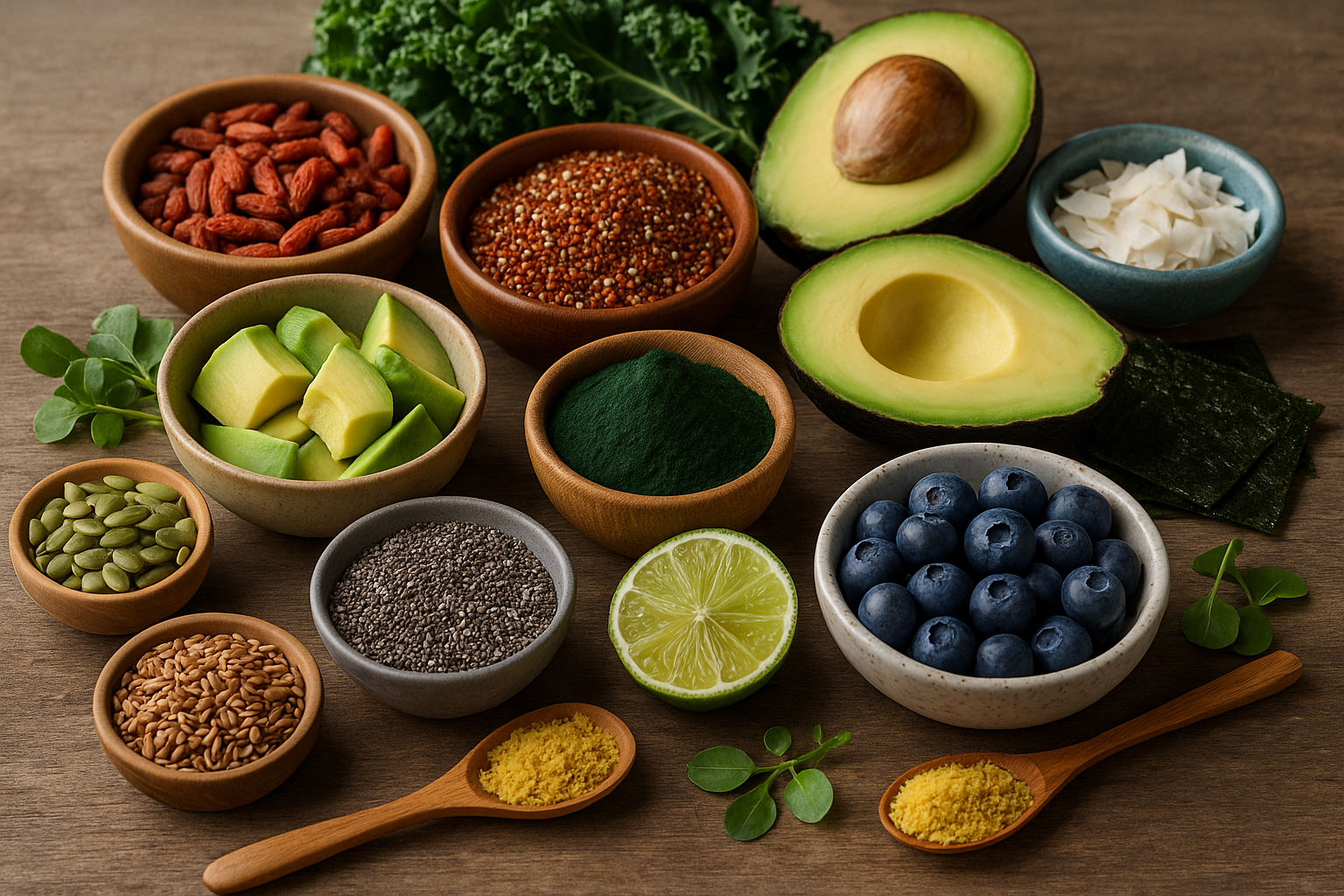
A plant-based diet offers incredible health benefits—but to truly thrive as a vegan, it’s important to make sure you’re getting a variety of nutrient-dense, whole-food sources. Enter: plant-based superfoods.
These foods are packed with antioxidants, essential vitamins, minerals, fiber, and healthy fats, all without any animal products. In this article, you’ll discover the most powerful vegan-friendly superfoods, how to use them, and why they’re essential for energy, immunity, brain health, skin glow, and more.
What Makes a Superfood “Vegan-Friendly”?
A superfood, by definition, is a food rich in nutrients and low in calories. Vegan superfoods are:
- 100% plant-based
- Naturally dense in vitamins, minerals, and antioxidants
- Often high in fiber and healthy fats
- Easy to incorporate into meals without relying on animal sources
They’re especially useful for vegans because they help fill nutritional gaps, like omega-3s, iron, and vitamin B12 alternatives.
1. Chia Seeds
Why they’re a vegan superfood:
- Rich in omega-3 fatty acids, which support brain and heart health
- Contain fiber, calcium, and plant-based protein
How to use:
- Add to smoothies, puddings, or overnight oats
- Use as an egg replacer in baking (1 tbsp chia + 3 tbsp water = 1 egg)
2. Spirulina
Why it’s a vegan superfood:
- One of the most nutrient-dense foods on Earth
- Contains iron, protein, B vitamins, and powerful antioxidants
How to use:
- Blend into green smoothies
- Mix with lemon juice and water as a detox drink
3. Hemp Seeds
Why they’re essential:
- A complete protein source—contains all 9 essential amino acids
- High in magnesium, zinc, and healthy fats
How to use:
- Sprinkle over salads, soups, or smoothie bowls
- Mix into plant-based yogurt or nut butter
4. Kale
Why it’s a vegan supergreen:
- Loaded with vitamins A, C, and K
- High in antioxidants like quercetin and kaempferol
How to use:
- Add to green smoothies, stir-fries, or salads
- Bake into crunchy kale chips
5. Nutritional Yeast
Why it’s a vegan must-have:
- Great source of vitamin B12 (when fortified)
- Adds a cheesy, umami flavor without dairy
How to use:
- Sprinkle over popcorn, pasta, or avocado toast
- Stir into soups, sauces, or mashed potatoes
6. Quinoa
Why it’s a vegan grain superstar:
- A complete plant-based protein
- Rich in iron, magnesium, and fiber
How to use:
- Use as a base for grain bowls
- Add to salads, soups, or vegan chili
7. Flaxseeds
Why they’re powerful:
- Contain lignans, plant compounds that support hormone balance
- Rich in omega-3 ALA, fiber, and protein
How to use:
- Grind and add to smoothies, oatmeal, or baking recipes
- Use as a binder in veggie burgers and baked goods
8. Avocados
Why they’re super:
- Packed with monounsaturated fats, which support brain and skin health
- Contain fiber, potassium, and vitamin E
How to use:
- Spread on toast, mash into guacamole, or blend into smoothies
9. Berries (Blueberries, Açaí, Goji)
Why they’re antioxidant heroes:
- Rich in polyphenols that protect against oxidative stress
- Low in sugar but high in flavor and nutrients
How to use:
- Add to breakfast bowls, smoothies, or bake into vegan treats
10. Seaweed
Why it matters:
- One of the few plant-based sources of iodine, essential for thyroid health
- Contains iron, calcium, and trace minerals
How to use:
- Add nori to rice dishes or sushi
- Sprinkle dulse flakes on salads or soups
11. Pumpkin Seeds (Pepitas)
Nutritional highlights:
- High in zinc, magnesium, and protein
- Promote hormone balance and immune support
How to use:
- Snack on roasted seeds
- Add to granola, trail mix, or oatmeal
12. Coconut (Oil, Milk, Flakes)
Why it’s a favorite:
- Contains medium-chain triglycerides (MCTs) for energy
- Antimicrobial properties and supports healthy digestion
How to use:
- Use coconut milk in curries or smoothies
- Add flakes to baked goods or bowls
13. Broccoli
Why it belongs on the list:
- High in sulforaphane, a powerful detox compound
- Great source of fiber, vitamin C, and folate
How to use:
- Steam or roast as a side dish
- Add to stir-fries, grain bowls, or soups
Sample Daily Vegan Superfood Menu
Breakfast:
- Green smoothie with kale, chia seeds, banana, and spirulina
Snack:
- Apple slices with almond butter and hemp seeds
Lunch:
- Quinoa bowl with roasted sweet potatoes, avocado, and pumpkin seeds
Snack:
- Popcorn with nutritional yeast and olive oil
Dinner:
- Lentil soup with a side of steamed broccoli and flaxseed crackers
Dessert:
- Chia pudding topped with goji berries and coconut flakes
Tips for Adding Superfoods to Your Vegan Lifestyle
- Rotate your greens: don’t eat spinach or kale every day—mix it up
- Grind seeds before consuming to unlock their nutrients
- Buy in bulk to save money on items like quinoa, flax, and chia
- Meal prep with superfoods to avoid last-minute unhealthy choices
Final Thoughts: Vegan, Vibrant, and Supercharged
Plant-based superfoods are more than trendy buzzwords—they’re nutrient powerhouses that can help vegans stay energized, focused, and well-nourished.
By incorporating a variety of these foods daily, you’ll boost your immunity, improve digestion, support brain function, and even enhance skin and hair from within—all without any animal products.
Nature has everything you need—start with what’s on your plate.