
The nutraceutical industry—where nutrition meets pharmaceutical science—is undergoing rapid transformation. With consumers demanding more natural, preventative health options, this global sector is projected to exceed $700 billion by 2027. But what’s driving this growth? And what trends will shape the future of nutraceuticals?
In this article, we’ll explore the top innovations, consumer shifts, and regulatory developments defining the future of nutraceuticals in 2025 and beyond.
What Are Nutraceuticals?
Nutraceuticals are food-based products that offer health benefits beyond basic nutrition. They include:
- Functional foods (e.g., fortified drinks, yogurts)
- Dietary supplements (e.g., capsules, powders)
- Herbal extracts
- Probiotics and prebiotics
- Bioactive compounds (e.g., curcumin, resveratrol)
These products aim to prevent chronic disease, support health, and enhance physical or mental performance—without necessarily being classified as medicines.
Global Industry Snapshot
- Market value in 2024: ~$550 billion
- Projected value by 2027: $720+ billion
- Annual growth rate: ~7–9%
- Top regions: North America, Europe, and rapidly expanding Asia-Pacific markets
Key drivers:
- Aging population
- Increased chronic disease
- Demand for preventive care
- Rise of self-diagnosis and self-care culture
- Clean-label and natural ingredient trends
Top Nutraceutical Trends for 2025
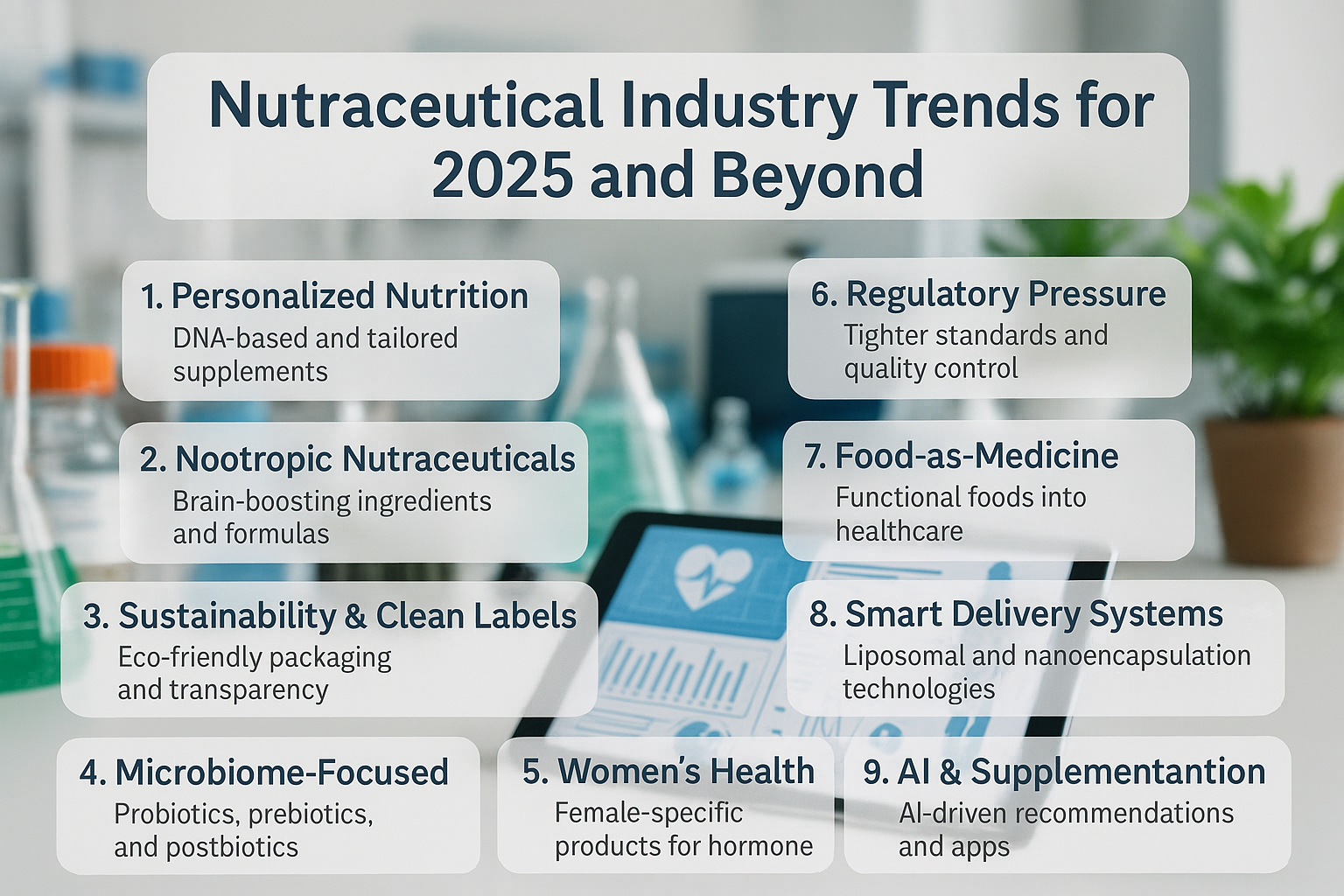
1. Personalized Nutrition and Genomic Supplements
The “one-size-fits-all” model is fading. Advances in genetic testing, microbiome analysis, and wearable health tech are making personalized nutraceuticals a top trend.
- Companies like Viome and Nutrigenomix offer DNA-based supplement plans
- AI-driven apps recommend supplements based on blood tests, gut health, and lifestyle data
- Custom supplement packs (e.g., Care/of, Rootine) are gaining traction
🔍 Expect growth in nutrigenomics, where diet and supplements are matched to your genetic profile.
2. Nootropic Nutraceuticals
Mental performance, focus, and cognitive longevity are top concerns, especially in younger consumers.
Emerging nootropic ingredients:
- Lion’s Mane mushroom
- L-theanine + caffeine stacks
- Citicoline, Rhodiola, and Bacopa monnieri
- Adaptogens for brain fog and burnout
Look for brain-health focused gummies, powders, and drinks in both wellness and mainstream markets.
3. Sustainability and Clean Label Demands
Consumers increasingly want products that are:
- Plant-based and cruelty-free
- Free from artificial ingredients, fillers, or synthetic binders
- Packaged in compostable, recyclable, or glass containers
Brands that provide full traceability of ingredients, eco-certifications, and “farm to supplement” transparency are set to dominate the premium market.
4. Microbiome-Focused Innovations
Gut health is a hot topic, and probiotics are no longer enough. The future includes:
- Postbiotics (beneficial compounds made by probiotics)
- Psychobiotics (probiotics for mood and mental health)
- Spore-based probiotics (shelf-stable and stomach acid resistant)
- Fermented nutraceutical drinks and capsules
🌿 Brands will focus on gut-brain axis solutions, not just digestion.
5. Women’s Health-Specific Formulas
From hormone balance to fertility to menopause, gender-specific nutraceuticals are booming.
Key focus areas:
- Adaptogens like ashwagandha and maca for cortisol balance
- Seed cycling powders for menstrual health
- Probiotic blends for vaginal flora
- Supplements for bone density, skin elasticity, and mood regulation during menopause
Expect to see more feminine-first wellness brands offering high-quality, science-backed options.
6. Regulatory Pressure and Quality Control
As the market grows, so does scrutiny.
Governments and consumer watchdogs are demanding:
- More clinical trials and safety data
- Label transparency and third-party testing
- Crackdown on false claims and unverified products (especially on e-commerce platforms)
Future-ready companies are investing in scientific validation, clean sourcing, and FDA-compliant practices.
7. Food-as-Medicine Expansion
Hospitals, insurance providers, and employers are exploring nutraceuticals as part of preventive care.
Examples:
- Supplements prescribed for diabetes prevention
- Insurance-covered vitamin programs
- “Functional cafeteria” foods in corporate wellness programs
The future of healthcare may include nutraceutical therapy alongside or even before pharmaceuticals.
8. Tech Integration: Smart Delivery Systems
Innovations in supplement delivery are making them more effective and bioavailable:
- Liposomal delivery (e.g., liposomal vitamin C)
- Nanoencapsulation (micron-sized nutrients for faster absorption)
- Smart pill bottles with reminders and tracking
- Supplement gummies, sprays, and patches
🔬 Look for pharmaceutical-grade delivery systems to enter the nutraceutical world.
9. Mental Health + Adaptogens
Mental health isn’t just trending—it’s becoming foundational to how people view total wellness. Nutraceuticals are evolving from “performance enhancement” to emotional resilience and nervous system regulation.
Popular adaptogens:
- Reishi for calm
- Rhodiola for energy
- Tulsi for stress
- CBD (where legal) for sleep and anxiety
Formulas are becoming stacked and multi-functional to target mood, energy, and stress in a single serving.
10. AI and Data-Driven Supplementation
AI is revolutionizing how consumers engage with supplements.
Innovations include:
- Apps that track symptoms and auto-adjust supplement plans
- AI coaches for ingredient education and reminders
- Subscription boxes that evolve based on user behavior
- Integration with wearables for real-time wellness optimization
🤖 Expect an explosion of AI-powered personalization and data-driven wellness dashboards.
Final Thoughts: A Smart, Personalized, Transparent Future
The nutraceutical industry is no longer about hype or pills—it’s about evidence-based, individualized, and ethically produced health solutions. Consumers want results, and they want them naturally, safely, and conveniently.
As we move into 2025 and beyond, expect a wellness world where technology, nature, and science intersect—and nutraceuticals sit at the center of it all.