
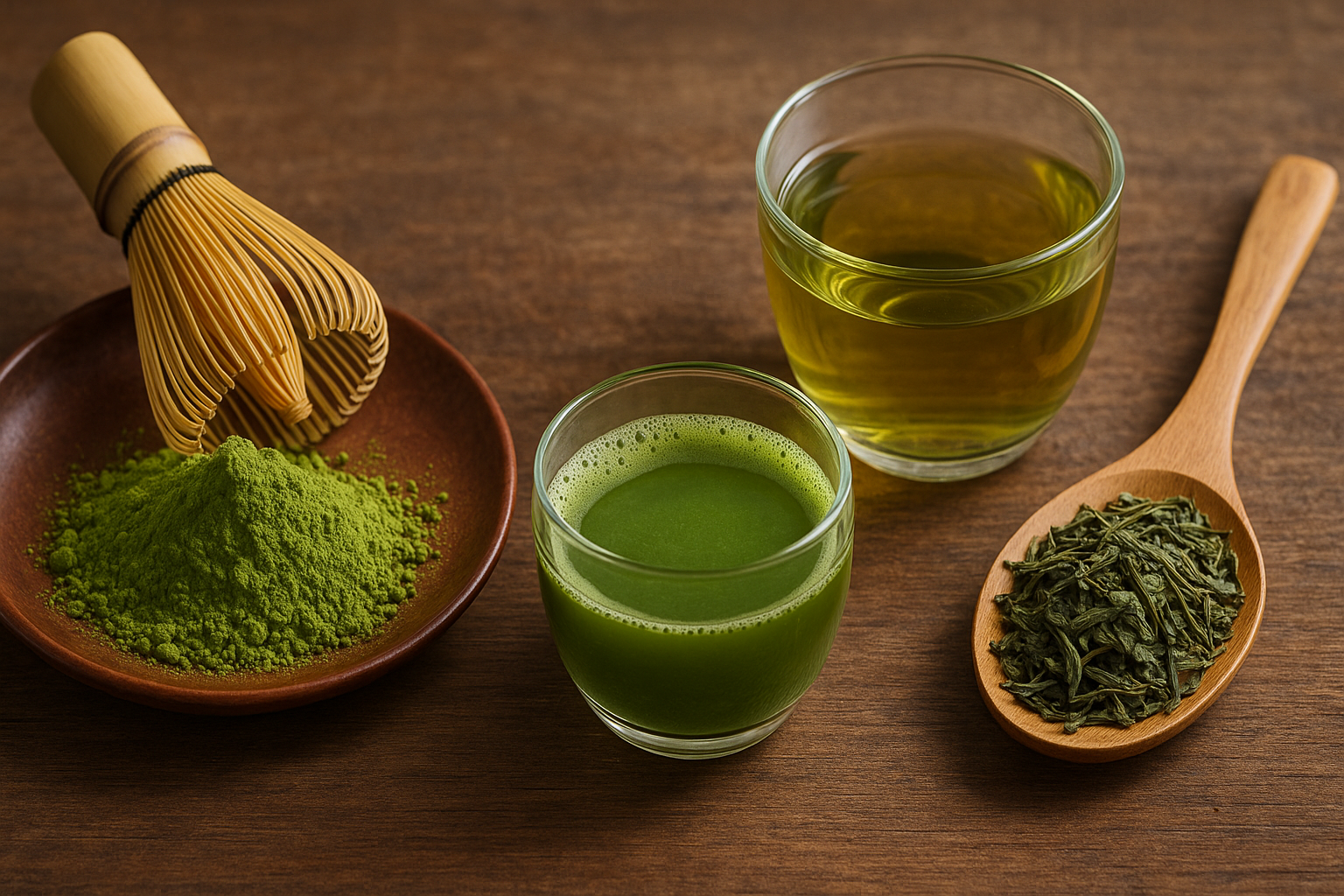
Green tea has long been hailed as one of the healthiest beverages on the planet, packed with antioxidants and praised for its calming yet energizing properties. But in recent years, matcha—a powdered, concentrated form of green tea—has gained massive popularity, often labeled a “superior superfood.”
So what’s the real difference? Is matcha actually better than green tea? In this article, we compare both from a health, nutritional, and functional perspective to help you decide which one fits your lifestyle best.
What Is Green Tea?
Green tea is made from the Camellia sinensis plant. After harvesting, the leaves are steamed or pan-fired to prevent oxidation, which preserves their green color and high antioxidant content.
Types of green tea:
- Sencha: The most common Japanese green tea
- Gyokuro: Grown in the shade, sweeter and richer
- Bancha: Lower grade, more robust in flavor
- Hojicha: Roasted green tea with a nutty aroma
Green tea is typically steeped in hot water and enjoyed for its fresh, slightly bitter taste and health benefits.
What Is Matcha?
Matcha is a powdered form of green tea, but it’s not just ground-up tea leaves. It’s made from specially grown and processed leaves (usually tencha), which are:
- Shade-grown for 3–4 weeks before harvest
- De-veined and de-stemmed
- Stone-ground into a vibrant green powder
With matcha, you’re consuming the entire leaf, not just an infusion—making it much more concentrated in nutrients and flavor.
Nutritional Comparison: Matcha vs. Green Tea
| Nutrient/Compound | Matcha (1 tsp) | Green Tea (1 cup) |
|---|---|---|
| Caffeine | ~70 mg | ~30–40 mg |
| L-Theanine | High | Moderate |
| Antioxidants (EGCG) | Up to 137x more | Standard levels |
| Chlorophyll | High (due to shade-growing) | Lower |
| Calories | ~3 | 0 |
Winner in concentration: Matcha
Winner in subtlety and lightness: Green Tea
Health Benefits: What Does Science Say?
1. Antioxidant Power
Matcha is a nutrient powerhouse, offering up to 137 times more EGCG (epigallocatechin gallate) than regular green tea, according to a study published in the Journal of Chromatography.
EGCG is linked to:
- Reduced oxidative stress
- Lower inflammation
- Improved brain and heart health
- Anticancer properties
Both drinks are good—but matcha is like green tea on steroids when it comes to antioxidant content.
2. Energy and Mental Focus
Both matcha and green tea contain caffeine and L-theanine, a unique amino acid that:
- Promotes calmness
- Improves focus
- Prevents caffeine jitters
However, matcha has almost double the caffeine, which makes it better for:
- Morning productivity
- Pre-workout energy
- Mental clarity
Green tea is milder and more suitable for afternoon or evening sipping.
3. Weight Management
EGCG and caffeine work synergistically to:
- Boost metabolism
- Increase fat oxidation
- Improve exercise performance
This makes both drinks effective tools for weight control—but again, matcha delivers a stronger dose.
4. Heart Health
Green tea and matcha can help:
- Lower LDL (“bad”) cholesterol
- Improve blood pressure
- Reduce arterial stiffness
Daily consumption of either has been linked to reduced cardiovascular disease risk in large population studies from Japan and China.
5. Detoxification
Matcha is especially high in chlorophyll, a compound that:
- Helps eliminate heavy metals and toxins
- Supports liver function
- Acts as an internal deodorizer
Because matcha uses shade-grown leaves, it retains significantly more chlorophyll than traditional green tea.
Taste and Preparation
Green Tea:
- Light, grassy, slightly bitter
- Steeped with hot (not boiling) water for 1–3 minutes
- Ideal for sipping with meals
Matcha:
- Rich, creamy, and slightly sweet or umami
- Whisked into water or milk using a bamboo whisk (chasen)
- Used in lattes, smoothies, and even desserts
Which One Should You Choose?
Here’s a quick guide based on your goals:
| Your Goal | Best Choice |
|---|---|
| Maximum antioxidants | Matcha |
| Gentle caffeine boost | Green Tea |
| Weight management | Matcha |
| Simple prep and hydration | Green Tea |
| Brain focus and calm energy | Matcha (AM), Green Tea (PM) |
| Budget-friendly | Green Tea |
| Versatile in recipes | Matcha (lattes, baking) |
Can You Drink Both?
Absolutely. Many people rotate between green tea and matcha based on the time of day or how much energy they need.
Sample Day:
- Morning: Matcha latte for focus and sustained energy
- Afternoon: Green tea to hydrate and relax
- Evening: Decaffeinated herbal tea or hojicha (low-caffeine roasted green tea)
Side Notes: Are There Any Risks?
Both matcha and green tea are safe for most people, but in excess, they may cause:
- Insomnia (especially matcha due to higher caffeine)
- Iron absorption issues (drink away from meals if anemic)
- Stomach irritation if consumed on an empty stomach
Stick to 1–2 cups per day of matcha and 2–4 cups of green tea for optimal benefits.
Final Thoughts: Matcha vs. Green Tea—Who Wins?
There’s no one-size-fits-all answer. Matcha packs more punch in terms of nutrients and energy, while green tea offers a gentler, more accessible path to health and wellness.
If you want high performance, go matcha.
If you want daily balance, go green tea.
If you want the best of both worlds—have both.
Your health journey is personal—choose what fits your needs, taste, and lifestyle.