
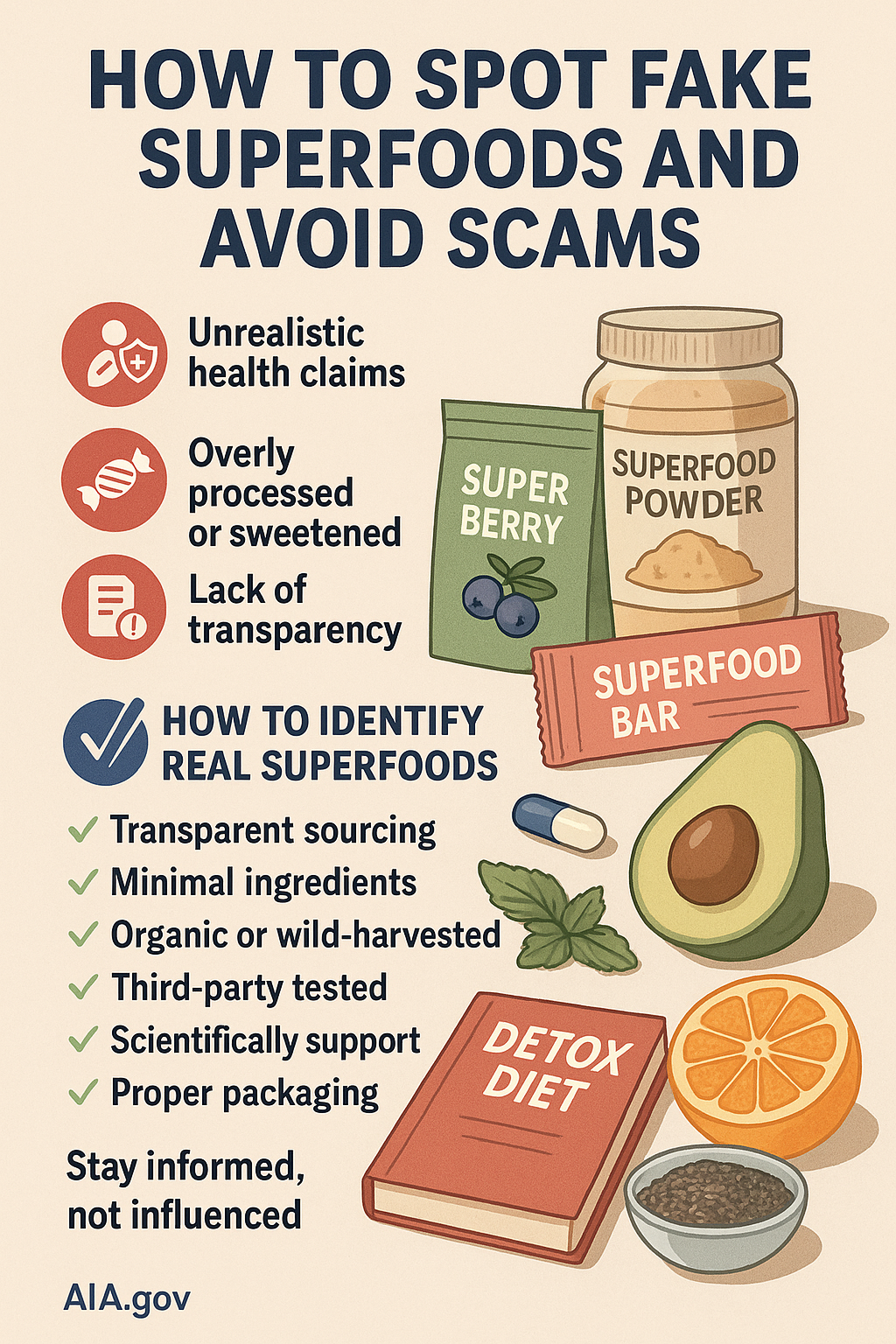
As superfoods grow in popularity, so do marketing gimmicks, exaggerated claims, and low-quality products. The wellness industry is booming, and unfortunately, not all products labeled as “superfood” live up to their promise.
In this article, we’ll teach you how to spot fake superfoods, avoid getting scammed, and make smart, informed choices when investing in your health.
What Are “Fake” Superfoods?
“Fake” superfoods are not necessarily harmful—but they’re often:
- Overpriced with minimal nutritional value
- Full of fillers, additives, or sugar
- Promoted with false or exaggerated health claims
- Poorly sourced, with contaminants or low-quality ingredients
These products rely more on branding than benefits. Your goal as a consumer is to recognize which superfoods are worth your money—and which are just hype.
Red Flags to Watch For
1. Unrealistic Health Claims
If a product promises to cure diseases, “detox your body in 3 days,” or “melt fat while you sleep,” it’s a red flag.
⚠️ Why it’s dangerous:
No single food can provide instant results. These claims are often not backed by science.
🔍 What to look for instead:
Products that mention studies, nutritional benefits, or supportive roles (e.g., “may support digestion”).
2. Overly Processed or Sweetened
Many “superfood” bars, drinks, and powders contain:
- Added sugars
- Artificial flavors
- Preservatives
- Cheap fillers like maltodextrin or corn syrup solids
⚠️ These additives cancel out the health benefits and spike your blood sugar.
🔍 Tip: Always read the ingredients list, not just the front label.
3. Lack of Transparency
Legit brands will share:
- Ingredient sourcing (organic, local, wild-harvested, etc.)
- Testing protocols (for purity, heavy metals, bacteria)
- Certifications (USDA Organic, Non-GMO, third-party tested)
If this information is missing or vague, that’s a concern.
4. No Scientific Support
Some superfoods become trends before there’s any real research behind them.
⚠️ A product that only exists on social media or is backed by “influencer opinions” likely lacks substance.
🔍 Search for peer-reviewed studies or publications supporting the benefits of that ingredient.
5. Unreasonably High Prices
A true superfood doesn’t have to cost a fortune.
Sometimes, companies mark up basic ingredients—like spirulina, maca, or chia—under the guise of exclusivity.
🔍 Compare prices per gram or serving across brands, and avoid buying from websites that don’t offer customer support or reviews.
How to Identify Real Superfoods
Here’s what to look for in high-quality superfood products:
| Quality Indicator | What It Means |
|---|---|
| Transparent sourcing | Origin of ingredients is disclosed |
| Minimal ingredients | Short ingredient list, no fillers |
| Organic or wild-harvested | Fewer pesticides and contaminants |
| Third-party tested | Verified purity and potency |
| Scientifically supported | Backed by peer-reviewed research |
| Proper packaging | Stored in light-blocking, airtight containers |
Examples of Common Superfood Scams
❌ “Detox” Superfood Teas
Usually contain laxatives or diuretics—not real detoxing.
❌ “Fat-Burning” Superfood Coffee
Often loaded with caffeine, sweeteners, and MCT oil, with no real superfood benefit.
❌ Overhyped Exotic Powders
Ingredients like camu camu, lucuma, or maqui berry are often sold at high prices—but offer minimal added benefit over more affordable options like berries or spinach.
Smart Ways to Shop for Superfoods
- Stick to Whole Foods First:
Fresh fruits, leafy greens, nuts, seeds, and spices like turmeric and garlic are some of the best superfoods—and they don’t need fancy labels. - Buy From Reputable Brands:
Choose companies that are transparent, science-backed, and have positive user reviews. - Use Certified Retailers:
Look for USDA Organic, GMP-certified, or verified by independent labs like NSF or Informed Choice. - Avoid Overpromising Marketing:
Trust brands that educate more than they advertise.
Budget-Friendly Real Superfoods
You don’t need to break the bank. Some of the best and most affordable superfoods include:
- Oats
- Lentils
- Chia seeds
- Pumpkin seeds
- Cabbage
- Sweet potatoes
- Frozen spinach or berries
These are all nutrient-dense, versatile, and widely accessible.
Final Thoughts: Stay Informed, Not Influenced
The superfood industry is full of promise—and pitfalls. With a bit of research, label-reading, and critical thinking, you can avoid scams and invest in the foods that truly support your health.
Real superfoods don’t need fake claims—they speak for themselves through centuries of traditional use and modern science.
Choose smart. Eat whole. Protect your wallet and your wellness.