
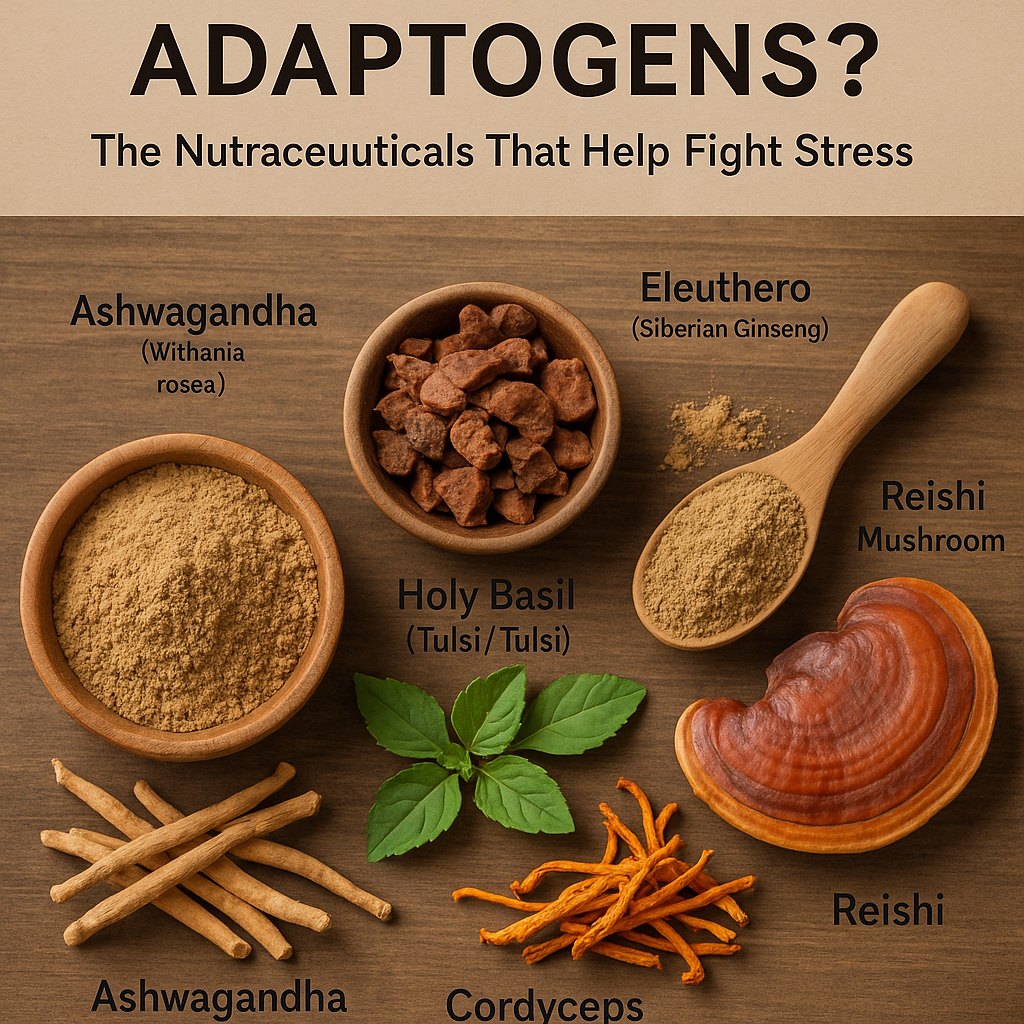
In a world where stress is practically unavoidable, more people are turning to natural solutions to help the body adapt and recover. Enter adaptogens—a special class of herbs and nutraceuticals known for their ability to balance stress hormones, enhance resilience, and promote overall well-being.
But what exactly are adaptogens, how do they work, and which ones should you consider adding to your wellness routine?
In this article, we explore the science behind adaptogens, list the most researched ones, and show you how to use them effectively.
What Are Adaptogens?
Adaptogens are natural substances—usually herbs or mushrooms—that help the body adapt to stress, whether it’s physical, emotional, or environmental. Unlike stimulants or sedatives, adaptogens work non-specifically, meaning they normalize body function regardless of whether it’s too high or too low.
The concept comes from traditional medicine systems like Ayurveda and Traditional Chinese Medicine, but modern science is catching up and validating their benefits.
To be classified as an adaptogen, a substance must:
- Be non-toxic when taken in normal doses
- Help the body resist stressors
- Support homeostasis (balance)
How Do Adaptogens Work?
Adaptogens primarily act on the HPA axis (hypothalamic-pituitary-adrenal axis) and the sympathetic nervous system, which are responsible for your stress response.
They help regulate cortisol levels, improve energy production, and enhance the body’s ability to cope with stress without overreacting or crashing.
Think of adaptogens as a thermostat for your stress hormones—adjusting them up or down as needed to keep you balanced.
Top Adaptogenic Nutraceuticals
1. Ashwagandha (Withania somnifera)
One of the most popular adaptogens, ashwagandha is known for reducing anxiety and cortisol levels.
Benefits:
- Lowers stress and anxiety
- Improves sleep quality
- Enhances physical performance
- May support thyroid function
How to use: 300–600 mg daily in capsule or powder form.
2. Rhodiola Rosea
Known as the “golden root,” rhodiola helps combat fatigue and enhances mental performance.
Benefits:
- Fights burnout and brain fog
- Improves stamina and energy
- Supports mood and resilience
How to use: 200–400 mg daily, ideally on an empty stomach.
3. Holy Basil (Tulsi)
A sacred herb in Ayurveda, holy basil is both a calming and immune-supportive adaptogen.
Benefits:
- Reduces anxiety and depression
- Enhances immune function
- May support blood sugar balance
How to use: Drink as tea or take in capsule/tincture form.
4. Eleuthero (Siberian Ginseng)
Often used by athletes, eleuthero helps enhance endurance and resistance to stress.
Benefits:
- Increases physical stamina
- Supports immune response
- Balances stress hormones
How to use: 300–1200 mg per day, preferably in cycles.
5. Schisandra Berries
Used in Traditional Chinese Medicine, schisandra helps with liver support and mental clarity.
Benefits:
- Enhances concentration
- Improves liver detox
- Balances mood and energy
How to use: As a tincture, capsule, or berry powder.
6. Cordyceps
A functional mushroom known for increasing oxygen uptake and stamina.
Benefits:
- Boosts athletic performance
- Supports adrenal function
- May help with fatigue
How to use: 1–3 grams daily as a powder or capsule.
7. Reishi Mushroom
Reishi is a calming adaptogen often used for sleep and immune support.
Benefits:
- Reduces anxiety
- Promotes restful sleep
- Strengthens immune defenses
How to use: 1–2 grams daily in tea, tincture, or capsules.
How to Take Adaptogens Safely
Adaptogens are generally safe, but here are some best practices:
- Start with one adaptogen to assess how your body responds
- Take them in cycles (e.g., 6 weeks on, 1 week off) to avoid overstimulation
- Always choose high-quality supplements from reputable brands
- If you’re pregnant, breastfeeding, or on medication, consult your doctor first
When Should You Use Adaptogens?
Adaptogens can be used during periods of:
- Chronic stress or burnout
- Mental exhaustion or brain fog
- Intensive physical training
- Poor sleep or adrenal fatigue
- Recovery from illness or immune challenges
They are not quick fixes, but with consistent use, they can restore balance and resilience.
Adaptogens in Daily Life
You can easily incorporate adaptogens into your lifestyle:
- Morning smoothie with ashwagandha or maca
- Afternoon tea with tulsi or reishi
- Pre-workout energy with rhodiola or cordyceps
- Evening wind-down with reishi or holy basil
Final Thoughts: Nature’s Stress Shields
Adaptogens offer a holistic, natural approach to stress management, without the dependency risks of pharmaceuticals. With thousands of years of traditional use and growing modern evidence, they’re a powerful tool in the pursuit of balance, energy, and emotional resilience.
If you’re feeling run down, anxious, or overwhelmed, it may be time to explore the world of adaptogens—and give your body the support it truly needs.