
Chia seeds have skyrocketed in popularity over the past decade, finding their way into smoothies, yogurts, puddings, and health food shelves around the world. Marketed as a “superfood,” these tiny black and white seeds are celebrated for their high nutritional value and health benefits. But is all the hype justified?
In this article, we’ll dive into the science behind chia seeds, explore their nutritional content, evaluate their benefits, and determine whether they truly deserve their superfood status.
What Are Chia Seeds?
Chia seeds come from the plant Salvia hispanica, which is native to Central America. They were a staple in the ancient diets of the Aztecs and Mayans, who valued them for their energy-boosting properties.
Today, chia seeds are considered a functional food, meaning they offer health benefits beyond basic nutrition.
Nutritional Powerhouse in a Tiny Package
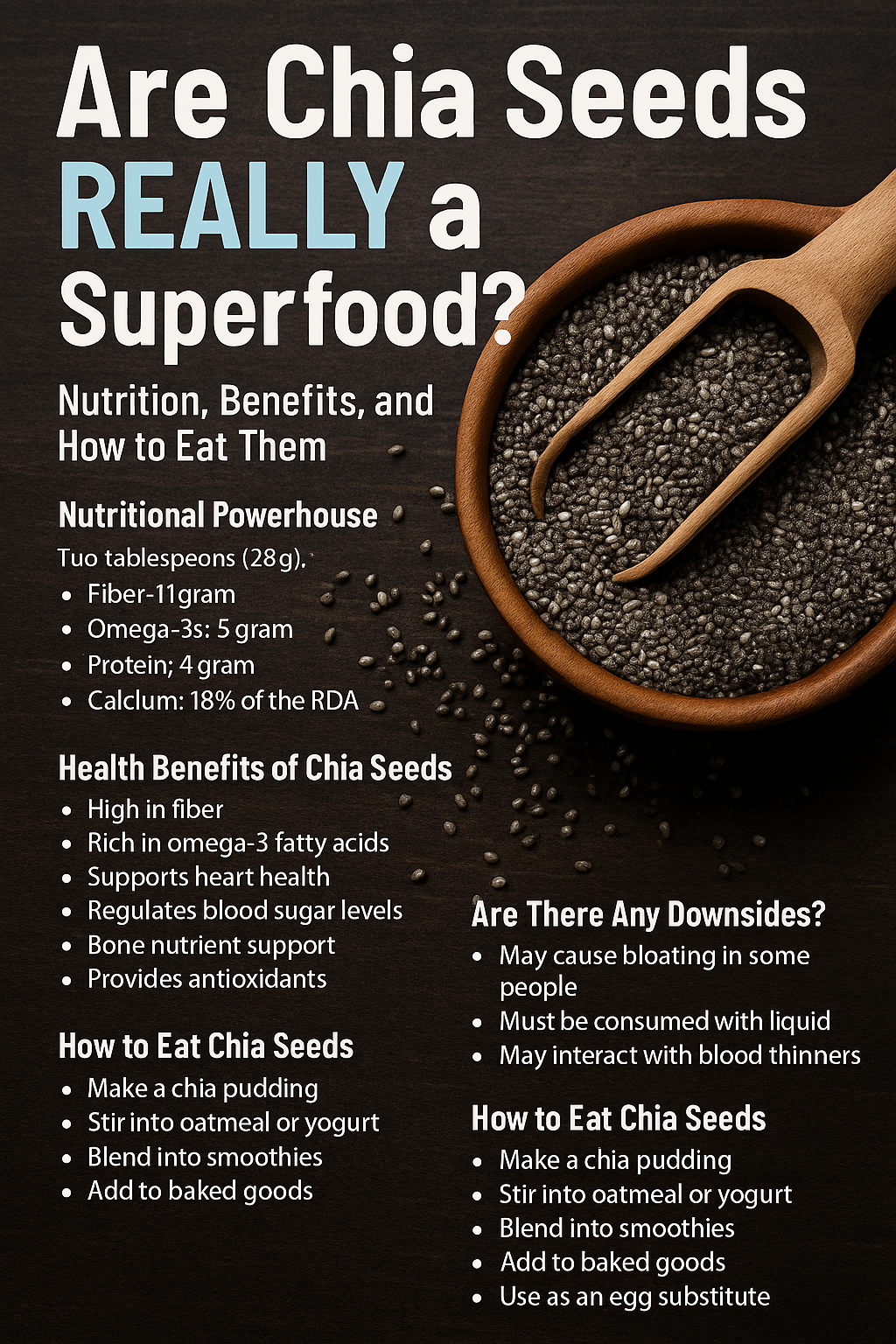
Chia seeds are incredibly nutrient-dense. Just two tablespoons (28 grams) provide:
- Fiber: 11 grams
- Protein: 4 grams
- Omega-3 fatty acids: 5 grams (mainly ALA)
- Calcium: 18% of the RDA
- Magnesium: 30% of the RDA
- Phosphorus: 27% of the RDA
- Iron and zinc in smaller amounts
They are also gluten-free, low-carb, and low-calorie, making them ideal for various diets.
Top Health Benefits of Chia Seeds
1. High in Fiber for Digestive Health
One of chia seeds’ most praised attributes is their fiber content. Most of the carbs in chia seeds are actually fiber, which supports:
- Regular bowel movements
- Gut microbiome health
- Prolonged satiety (feeling full longer)
This makes them useful for weight management and digestive comfort.
2. Plant-Based Source of Omega-3s
Chia seeds are one of the richest plant-based sources of omega-3 fatty acids, particularly alpha-linolenic acid (ALA). These fats help reduce inflammation and support heart and brain health.
While ALA is not as bioavailable as EPA and DHA found in fish oil, it still contributes to overall omega-3 intake, especially for vegetarians and vegans.
3. Supports Heart Health
The combination of fiber, omega-3s, and antioxidants may help:
- Lower bad cholesterol (LDL)
- Reduce blood pressure
- Decrease inflammation
Several small studies suggest that chia seeds can help improve heart disease risk markers over time.
4. Regulates Blood Sugar
Chia seeds can slow the digestion of carbohydrates, preventing blood sugar spikes. This is especially beneficial for people with insulin resistance or type 2 diabetes.
Adding chia to meals can reduce the glycemic index of the meal as a whole.
5. Bone Nutrient Support
Chia seeds are high in calcium, phosphorus, and magnesium, which are essential for bone strength and density.
Just two tablespoons provide more calcium than a glass of milk, making them a great plant-based option for bone health.
6. Provides Energy and Endurance
Historically, chia seeds were used by warriors and messengers to sustain energy during long treks. Today, athletes use chia to stay hydrated and energized due to their ability to absorb 10–12 times their weight in water.
7. Rich in Antioxidants
Antioxidants in chia seeds help fight oxidative stress, which contributes to aging and chronic disease. These compounds help protect the oils in the seeds from going rancid, giving them a long shelf life without refrigeration.
Are There Any Downsides?
While chia seeds are safe and beneficial for most people, there are a few considerations:
- Start small: Due to their high fiber content, too much too fast can cause bloating or discomfort.
- Hydration matters: Always consume with enough liquid, as dry chia can expand in the esophagus.
- Medication interactions: If you’re on blood thinners or blood pressure meds, consult a doctor, as chia can slightly thin blood and reduce pressure.
How to Eat Chia Seeds
Chia seeds are incredibly versatile and nearly tasteless, which makes them easy to incorporate into your diet:
- Chia Pudding: Mix 2 tbsp with 1/2 cup of milk and refrigerate overnight
- Smoothies: Blend or sprinkle for fiber boost
- Baking: Use as an egg substitute (1 tbsp chia + 3 tbsp water = 1 egg)
- Oatmeal and Yogurt: Stir in for texture and nutrition
- Soups and Sauces: Use to thicken naturally
Whole vs. Ground: Which Is Better?
Unlike flaxseeds, chia seeds do not need to be ground to absorb nutrients. Your body can digest them whole. However, some people find ground chia easier to incorporate into baked goods and smoothies.
Final Verdict: Superfood Status Earned?
Chia seeds are nutrient-dense, easy to use, and scientifically supported in many of their health claims. They may not be a magic bullet, but they’re certainly one of the most versatile and effective additions to a healthy diet.
If you’re looking to improve your fiber intake, heart health, energy, and digestive wellness, chia seeds are a superfood worth keeping in your kitchen.