
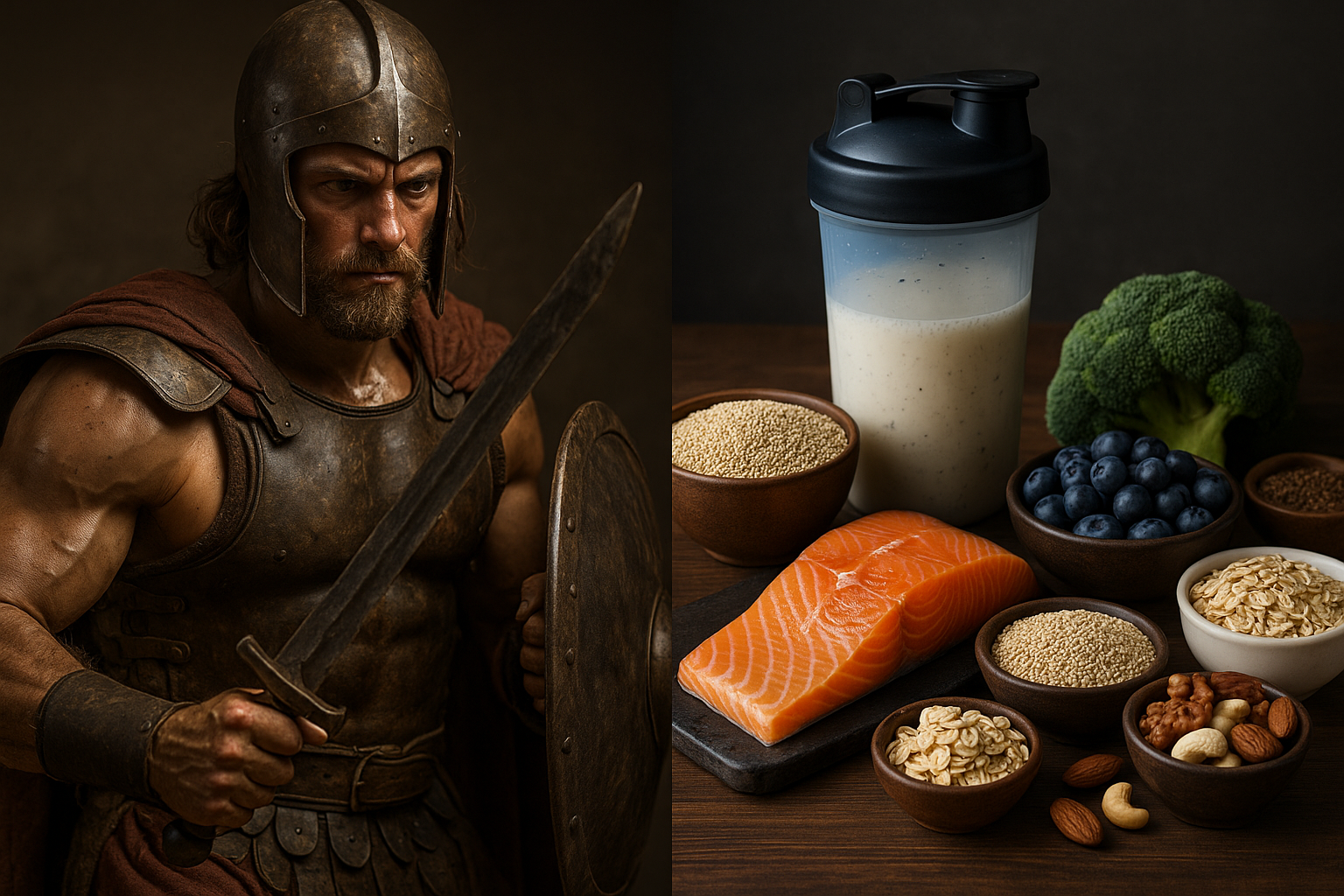
Throughout history, warriors have relied on food not only for survival but for strength, stamina, and mental focus. From the lean diets of Spartan hoplites to the high-fat feasts of Viking raiders, ancient warriors intuitively understood the power of nutrition to fuel the body and mind. Today, sports science has refined these principles through precise macronutrient ratios, supplements, and timing strategies. But how do ancient approaches to performance nutrition compare to modern sports science? Let’s explore the parallels and contrasts that shape our understanding of optimal human performance.
Fueling the Fighters: What Ancient Warriors Ate
1. Spartan Warriors (Greece, 5th century BCE)
Spartans followed a disciplined, plant-forward diet built for endurance and physical resilience:
- Staple: Black broth – a soup made from pork, blood, vinegar, and salt
- Primary foods: barley porridge, figs, olives, lentils
- Occasional meats and cheeses
- Wine in moderation
This low-fat, high-fiber diet provided complex carbohydrates, supporting sustained energy. Their frugal meals were aligned with intense training routines that emphasized fasting, discipline, and lean muscle mass.
2. Roman Gladiators
Known as “hordearii” or “barley men,” gladiators consumed:
- Barley and wheat
- Beans and legumes
- Dried fruits
- Occasional meat or fish
- Ash beverages for mineral replenishment (like calcium and magnesium)
Contrary to the image of meat-heavy warriors, they relied heavily on plant-based fuel and were known for their dense bones and robust strength, as confirmed by archaeological analysis.
3. Viking Raiders
Vikings favored high-protein, high-fat foods to support explosive power and cold-weather endurance:
- Salted and dried fish
- Mutton and wild game
- Fermented dairy
- Berries and root vegetables
- Ale and mead
They valued animal fats as an energy source, which aligns with ketogenic principles seen in some modern endurance athletes.
4. Samurai (Feudal Japan)
Samurai consumed a mostly vegetarian diet:
- Brown rice
- Miso soup
- Tofu and seaweed
- Seasonal vegetables
- Occasionally fish or poultry
This diet was light but rich in phytonutrients and fermented foods, supporting mental clarity and gut health, both essential for Zen-like focus and battlefield readiness.
Principles of Ancient Performance Nutrition
Despite cultural differences, ancient warrior diets shared several principles:
- Whole, seasonal foods
- Minimal processing
- Balanced macronutrients
- Emphasis on digestive health and natural energy
- Use of fasting or meal-timing for discipline and clarity
While modern science has refined the details, these intuitive strategies often mirror contemporary findings.
The Rise of Modern Performance Nutrition
With the development of biochemistry, exercise physiology, and metabolic science, modern athletes now have access to targeted nutritional strategies aimed at enhancing performance.
Macronutrient Optimization
- Carbohydrates – fuel for high-intensity performance
- Proteins – essential for muscle recovery and hypertrophy
- Fats – endurance and hormonal support
Modern sports nutrition focuses on timing and ratio, such as pre-workout carb loading and post-workout protein synthesis windows.
Ergogenic Aids and Supplements
Modern athletes often use scientifically backed supplements like:
- Creatine monohydrate – for strength and power output
- Caffeine – for mental alertness and fat mobilization
- Beta-alanine – to buffer lactic acid buildup
- Branched-chain amino acids (BCAAs) – for recovery
- Nitrates (e.g., beetroot juice) – for blood flow and endurance
These are carefully dosed and tested, offering precise control over performance variables.
Hydration and Electrolytes
Whereas ancient warriors relied on fermented drinks or spring water, modern athletes monitor hydration with electrolyte balancing, including sodium, potassium, and magnesium levels.
Smart hydration improves muscle contraction, endurance, and thermoregulation.
Gut Health and Microbiome Support
Science now recognizes that the gut-brain axis and microbiome play a key role in recovery, immunity, and even mental resilience.
- Probiotic-rich foods: yogurt, kefir, kimchi
- Prebiotic fibers: bananas, oats, onions
- Digestive enzymes and anti-inflammatory herbs like turmeric and ginger
These ancient staples are making a comeback as sports nutrition begins to emphasize internal balance and systemic health.
Ancient Wisdom Meets Scientific Validation
Many ancient practices are now being confirmed by modern research:
| Ancient Practice | Modern Equivalent |
|---|---|
| Fermentation (Samurai, Vikings) | Probiotic supplements |
| Bone broth and ash beverages | Electrolyte and collagen powders |
| Fasting and meal timing | Intermittent fasting and nutrient timing |
| Herbal tonics (Ayurveda, Chinese medicine) | Adaptogens (e.g., Rhodiola, Ashwagandha) |
| Fat-based fueling (Vikings) | Ketogenic and low-carb endurance diets |
This convergence highlights the enduring value of ancestral nutrition, when coupled with scientific scrutiny.
Performance Food: Then and Now
Let’s compare a warrior’s meal with a modern athlete’s pre-workout and post-workout plate:
Ancient Warrior Meal (Gladiator-style)
- Barley porridge with lentils
- Figs and dates
- Ash drink for minerals
- Olive oil drizzle
Modern Equivalent
- Steel-cut oats with protein powder
- Berries and banana
- Electrolyte drink
- Almond butter or MCT oil
Despite different forms, both meals emphasize complex carbs, minerals, and energy-dense ingredients.
Holistic Performance: Beyond Nutrition
Ancient warriors and modern athletes also share non-nutritional performance habits:
- Sleep rituals
- Mindset training (meditation, stoicism, breathing)
- Community and social cohesion
- Connection to nature
These lifestyle elements are increasingly acknowledged in sports psychology and performance coaching today.
Final Thoughts: The Past Informs the Peak
Ancient warriors didn’t count macros or log calories—but they thrived on intuitive eating, nutrient diversity, and discipline. Modern sports nutrition offers unparalleled precision, but often circles back to the same truth: real food, balanced intake, and mindful preparation are the cornerstones of performance.
In fusing ancient practices with modern innovations, athletes and wellness seekers can find the sweet spot—where tradition meets transformation, and the battle for peak performance is won from the inside out.