
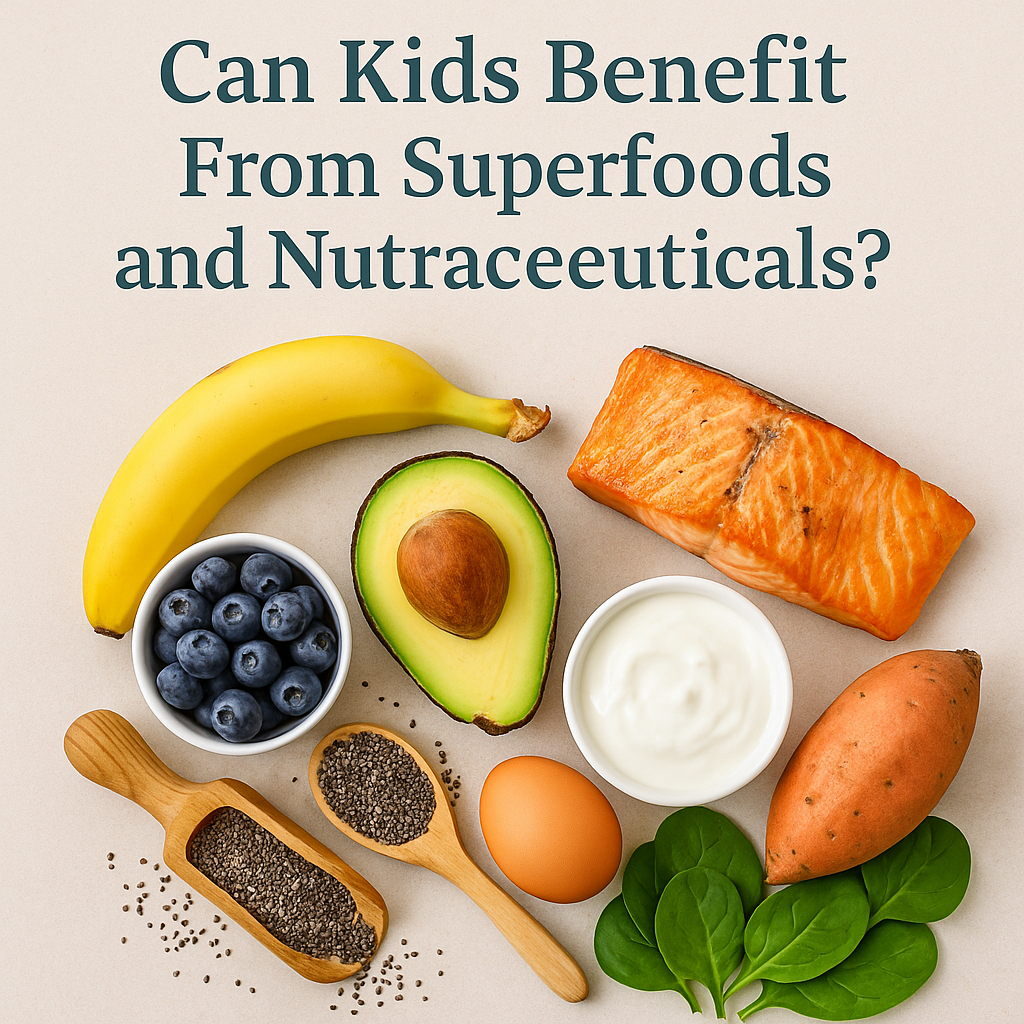
In today’s world of processed foods and sugar-loaded snacks, children often miss out on the nutrients their growing bodies truly need. While “superfoods” and “nutraceuticals” are popular among adults seeking better health, many parents wonder: Can kids benefit from them too?
The answer is yes—with the right choices and guidance. In this article, we’ll explore which superfoods are safe and beneficial for children, when nutraceuticals are appropriate, and how to incorporate these powerful nutrients into a child’s diet naturally.
What Makes a Food a Superfood for Kids?
A superfood isn’t a miracle ingredient—but it’s nutrient-dense, offering high levels of vitamins, minerals, antioxidants, and healthy fats in a small serving. For kids, this is ideal: small portions with big nutrition.
Common nutritional gaps in children include:
- Fiber
- Iron
- Omega-3s
- Vitamin D
- Zinc
- Magnesium
Superfoods can help fill these gaps naturally—without synthetic supplements in many cases.
Best Superfoods for Children
Here are child-friendly superfoods that support growth, brain development, digestion, and immunity:
1. Blueberries
Packed with antioxidants like anthocyanins that support brain function and immune health.
Why it’s great:
- Easy to snack on
- Boost memory and focus
- Strengthen immune system
📌 Tip: Add to oatmeal, yogurt, or freeze as a treat.
2. Avocados
Loaded with healthy fats, fiber, and potassium—essential for brain and heart development.
Why it’s great:
- Creamy texture most kids enjoy
- Supports brain growth and satiety
- Naturally low in sugar
3. Greek Yogurt
A great source of probiotics, calcium, and protein.
Why it’s great:
- Supports gut health and digestion
- Strengthens bones and teeth
- Good snack or breakfast base
📌 Tip: Choose plain yogurt and sweeten with fruit or honey (if child is over 1 year old).
4. Chia Seeds
Tiny but mighty, chia seeds provide fiber, omega-3s, and antioxidants.
Why it’s great:
- Supports digestion and brain development
- Helps prevent constipation
- Easy to mix into smoothies or puddings
5. Eggs
Complete protein with vitamin D, B12, choline, and iron.
Why it’s great:
- Supports cognitive development
- Keeps kids full and energized
- Versatile in meals
6. Sweet Potatoes
Rich in beta-carotene, fiber, and slow-burning carbs.
Why it’s great:
- Supports vision and immunity
- Naturally sweet flavor
- Can be baked, mashed, or added to muffins
7. Oats
Whole-grain, high in soluble fiber (beta-glucan) and B vitamins.
Why it’s great:
- Stabilizes blood sugar
- Improves energy and digestion
- Great for breakfast or snacks
8. Leafy Greens (Spinach, Kale)
High in iron, calcium, folate, and antioxidants—though sometimes hard to sell to kids!
Why it’s great:
- Supports bone growth and oxygen delivery
- Can be blended into smoothies, sauces, or pasta
9. Salmon
Rich in DHA, an omega-3 crucial for brain development and focus.
Why it’s great:
- Supports cognitive function and mood
- Improves attention and learning
- Try in patties, tacos, or rice bowls
10. Bananas
A natural source of potassium, vitamin B6, and quick energy.
Why it’s great:
- Easy to digest
- Great pre-activity snack
- Supports nervous system health
Are Nutraceuticals Safe for Children?
Nutraceuticals are concentrated bioactive compounds from food—like omega-3 capsules, probiotics, or multivitamins.
🟡 In children, they should be:
- Recommended by a pediatrician
- Tailored to the child’s age and needs
- Used as a supplement, not a replacement for real food
Some nutraceuticals appropriate for kids include:
- Probiotics (for digestion, immunity, especially after antibiotics)
- Omega-3 DHA (for brain and visual development)
- Vitamin D (if deficiency is diagnosed)
- Iron (for anemic children)
❌ Avoid giving children herbal extracts, detox supplements, or high-dose adult products without medical advice.
Tips to Incorporate Superfoods into Kids’ Diets
- Start early – Introduce diverse tastes during toddler years.
- Make it fun – Turn meals into colorful plates or use cookie cutters.
- Blend or hide – Add spinach to smoothies, carrots to muffins.
- Lead by example – Kids mimic what they see adults eating.
- Keep it simple – One superfood per meal is enough.
Sample Kid-Friendly Meal Plan with Superfoods
🧁 Breakfast: Oatmeal with banana slices and chia seeds
🍱 Lunch: Scrambled eggs with spinach and sweet potato mash
🥤 Snack: Greek yogurt with blueberries
🍲 Dinner: Salmon bites with brown rice and avocado
🥛 Dessert: Banana-chia smoothie
Final Thoughts: Growing Strong With Superfoods
Superfoods can play a major role in supporting children’s growth, immunity, focus, and energy—all while shaping lifelong eating habits. Nutraceuticals, when needed and approved by a doctor, can fill gaps safely.
In a world of fast food and sugary snacks, offering superfoods gives your child a head start on health. Keep it colorful, fun, and nourishing—because every bite builds their future.