
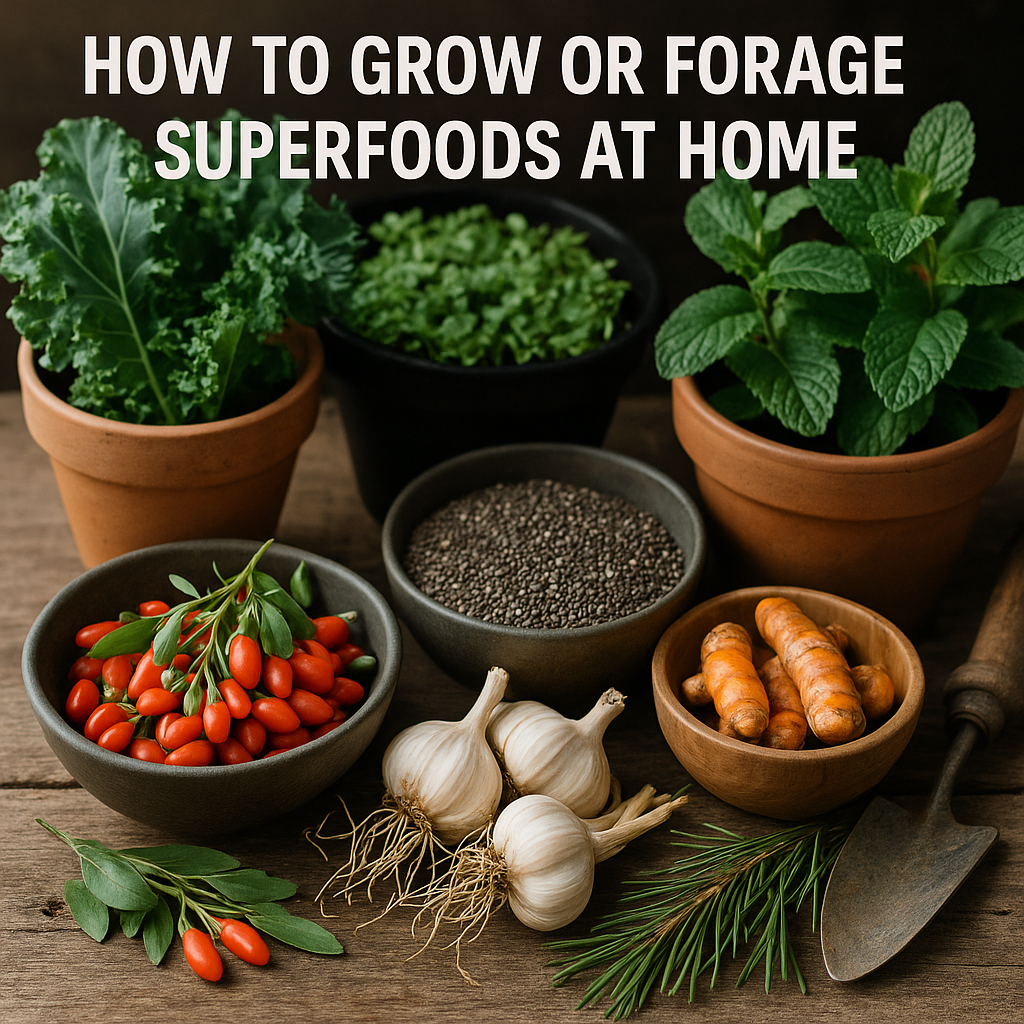
Superfoods aren’t just something you find in fancy health stores—they’re often growing in your garden, on your windowsill, or even in the wild. Growing or foraging your own superfoods is a rewarding way to save money, connect with nature, and consume fresher, more potent nutrients.
In this article, we’ll show you how to grow easy superfoods at home (even in small spaces), forage common wild varieties safely, and turn your home into a mini superfood source.
Why Grow or Forage Superfoods?
- Cost-effective: You save big on expensive packaged items.
- Ultra-fresh: Higher nutrient density than store-bought.
- Sustainable: Reduces packaging and transportation impact.
- Empowering: You control the soil, water, and process.
- Educational: Great for families, kids, and holistic living.
Plus, it’s deeply satisfying to eat what you grow or forage with your own hands.
Easy Superfoods to Grow at Home
Even without a backyard, many nutrient-dense plants thrive in containers, balconies, or windowsills.
1. Kale
- High in: Vitamin K, C, calcium, antioxidants
- Grows in: Pots, raised beds, even window boxes
- Season: Spring or fall (cool weather)
- Tip: Pick outer leaves often to keep it producing.
2. Spinach
- High in: Iron, folate, magnesium
- Grows in: Shallow containers or garden beds
- Season: Early spring and fall
- Tip: Prefers partial shade in warmer climates.
3. Microgreens
- High in: Vitamins C, E, and K—up to 40x more than mature plants!
- Grows in: Trays indoors under a light
- Harvest: In just 7–10 days
- Best varieties: Radish, broccoli, mustard, arugula
4. Chia
- High in: Omega-3s, fiber, protein
- Grows in: Garden soil or pots
- Tip: Let flowers mature and dry for seed harvesting.
5. Turmeric
- High in: Curcumin, anti-inflammatory benefits
- Grows in: Warm, humid conditions (indoor pots work well)
- Tip: Start from rhizomes; harvest after 8–10 months.
6. Goji Berries
- High in: Vitamin A, antioxidants, iron
- Grows in: Full sun, well-drained soil
- Tip: Needs a bit of space, but thrives in large pots.
7. Garlic
- High in: Allicin, a powerful immune booster
- Grows in: Small beds or containers
- Tip: Plant cloves in fall for harvest the following summer.
8. Herbs with Superfood Benefits
- Basil (anti-inflammatory, great for mood)
- Parsley (iron-rich and detoxifying)
- Mint (soothes digestion and rich in antioxidants)
- Grow easily in kitchen windows or patio planters.
Indoor Growing Tips for Superfood Lovers
- Use LED grow lights if natural light is limited.
- Choose organic, nutrient-rich soil or potting mix.
- Keep a small compost bin to nourish your plants naturally.
- Mist plants like microgreens and herbs daily.
- Use recycled containers—like mason jars, yogurt tubs, or egg cartons.
Superfoods You Can Forage (Safely!)
Foraging can unlock wild, free superfoods—but it must be done with safety, ethics, and education.
1. Dandelion
- Edible leaves, flowers, and roots
- High in: Calcium, iron, vitamin A
- Use in: Teas, salads, sautés
2. Nettles
- High in: Iron, calcium, protein
- Use in: Soups, teas (after boiling or drying—don’t eat raw!)
- Tip: Use gloves to harvest safely.
3. Wild Berries
- Options: Mulberries, blackberries, elderberries
- Rich in: Polyphenols, fiber, vitamin C
- Caution: Learn to distinguish safe from toxic varieties.
4. Pine Needles
- High in: Vitamin C, antioxidants
- Use: Steeped into tea (especially from white pine)
- Tip: Avoid yew or poisonous pine species—ID matters.
5. Chickweed
- Tastes like spinach, found in gardens and fields
- High in: Iron, vitamins A and C
- Use in: Salads or lightly cooked
Foraging Safety Basics
✅ Positively identify every plant
✅ Avoid roadsides and chemically treated areas
✅ Only take what you need
✅ Follow local laws and ethics (don’t forage on private land without permission)
✅ Use a guidebook or local expert for first-time foraging
Combining Growing + Foraging
A hybrid approach works great:
- Grow year-round herbs and greens indoors
- Forage seasonal wild plants on walks or hikes
- Preserve extras by drying or freezing
💡 Example: Grow turmeric indoors + forage wild mint = DIY superfood tea blend!
How to Preserve Your Harvest
- Dry herbs and leaves in a dehydrator or hang in bundles
- Freeze berries or greens in small batches for smoothies
- Make tinctures or infusions with alcohol or apple cider vinegar
- Create powders by blending dried turmeric, kale, or herbs
Tools to Get Started
- Organic seeds or starter plants
- Lightweight pots and containers
- Small trowel and gloves
- LED grow light (if indoors)
- Guidebook for local wild edibles
- Mason jars for drying and storing
Final Thoughts: Superfoods Are Closer Than You Think
You don’t need a farm—or even a garden—to grow or harvest superfoods. With a bit of creativity, care, and curiosity, your own kitchen or neighborhood can become a source of powerful, nutrient-dense plants.
Grow them in a window box. Forage them on a mindful walk. Dry them, blend them, and enjoy the satisfaction of feeding your body with something you cultivated yourself.
Nature is generous. You just need to know where (and how) to look