
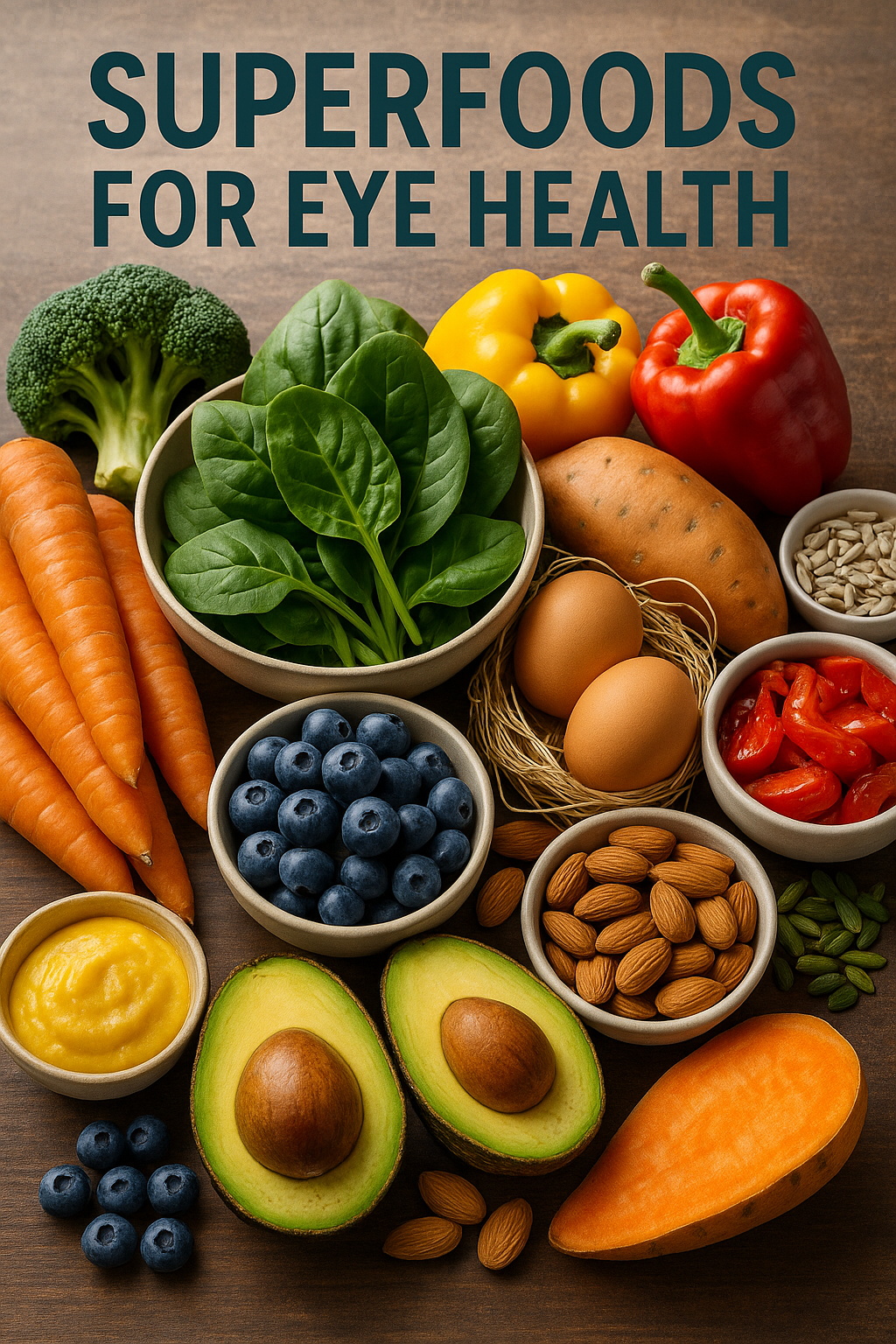
Your eyes are incredibly complex and delicate organs. They rely on a steady supply of nutrients to maintain vision, protect against light damage, and prevent age-related decline. While genetics and screen time play a role in eye health, what you eat can significantly impact how well your eyes function now and in the future.
In this article, we’ll highlight the most powerful superfoods for eye health, backed by science, and explain how they work to protect and nourish your vision.
Why Nutrition Matters for Your Eyes
Your eyes are constantly exposed to:
- Blue light from screens
- UV rays from the sun
- Oxidative stress and environmental toxins
- Aging-related degeneration of the retina and lens
To defend against this, your eyes need antioxidants, healthy fats, and specific nutrients—especially lutein, zeaxanthin, vitamin A, C, E, and omega-3 fatty acids.
Top Superfoods for Vision and Eye Health
1. Carrots
A classic for a reason! Carrots are rich in beta-carotene, which your body converts into vitamin A—essential for low-light vision and preventing dry eyes.
Benefits:
- Prevents night blindness
- Maintains a healthy cornea
- Fights oxidative stress in eye tissues
📌 Tip: Enjoy raw, steamed, or in soups with a little healthy fat for absorption.
2. Spinach and Kale
These leafy greens are packed with lutein and zeaxanthin, two carotenoids that accumulate in the retina and protect your eyes from UV and blue light damage.
Benefits:
- Reduce risk of macular degeneration and cataracts
- Improve visual sharpness
- Act as natural filters for harmful light
📌 Tip: Steam lightly or blend into smoothies for optimal absorption.
3. Egg Yolks
Eggs are another excellent source of lutein and zeaxanthin, as well as vitamin A and zinc.
Benefits:
- Improve pigment density in the retina
- Help vitamin A reach the eye effectively
- Support night vision
📌 Tip: Pair with vegetables for a powerful nutrient combo.
4. Fatty Fish (Salmon, Sardines, Mackerel)
Rich in omega-3 fatty acids (EPA and DHA), which are vital for the structure and function of eye cells.
Benefits:
- Prevent dry eye syndrome
- Protect against macular degeneration
- Reduce inflammation in ocular tissues
📌 Tip: Aim for 2 servings of fatty fish per week.
5. Sweet Potatoes
Another great source of beta-carotene and vitamin E, which helps protect eyes from oxidative stress.
Benefits:
- Supports night vision
- Fights age-related eye damage
- Boosts tear production
6. Bell Peppers (Especially Red and Yellow)
Loaded with vitamin C, which supports the health of eye blood vessels and may reduce the risk of cataracts.
Benefits:
- Antioxidant protection for the lens and retina
- Combats cellular aging in eye tissues
7. Blueberries
Rich in anthocyanins, these berries protect retinal cells from light damage and oxidative stress.
Benefits:
- Improve night vision
- Strengthen capillaries in the eyes
- Enhance blood flow to the retina
📌 Tip: Add to yogurt, oats, or freeze for a cool snack.
8. Broccoli
Provides vitamin C, lutein, and zeaxanthin, making it a triple threat for eye protection.
Benefits:
- Shields the eyes from UV damage
- Reduces inflammation
- May delay age-related vision loss
9. Nuts and Seeds (Especially Almonds, Sunflower Seeds, and Flaxseeds)
These are excellent sources of vitamin E and healthy fats.
Benefits:
- Protect against oxidative damage
- Reduce dry eye symptoms
- Improve tear film quality
10. Citrus Fruits (Oranges, Lemons, Grapefruit)
Loaded with vitamin C, a key antioxidant that helps reduce the risk of cataracts and supports overall eye structure.
Bonus Superfoods for Eye Support
- Avocados – Packed with lutein and healthy fats
- Corn – Contains both lutein and zeaxanthin
- Legumes – Great source of zinc, which supports retina health
- Dark chocolate – Contains flavonoids that may improve vision temporarily
Tips to Maximize Nutrient Absorption
- Pair fat-soluble vitamins (A, E, lutein) with healthy fats like olive oil or avocado
- Avoid overcooking leafy greens to retain nutrients
- Use whole foods over pills when possible—your body absorbs them better
- Stay hydrated to support tear production and eye moisture
Final Thoughts: See the Future Clearly
Your diet plays a significant role in protecting your eyes from damage and decline. By adding these superfoods to your weekly routine, you give your body the tools it needs to protect and enhance your vision—now and in the years to come.
Good eye health starts on your plate. Eat smart, see clear.